Should You Sell Your Portland Home in 2026 or Wait? A No‑Fluff Guide
TLDR
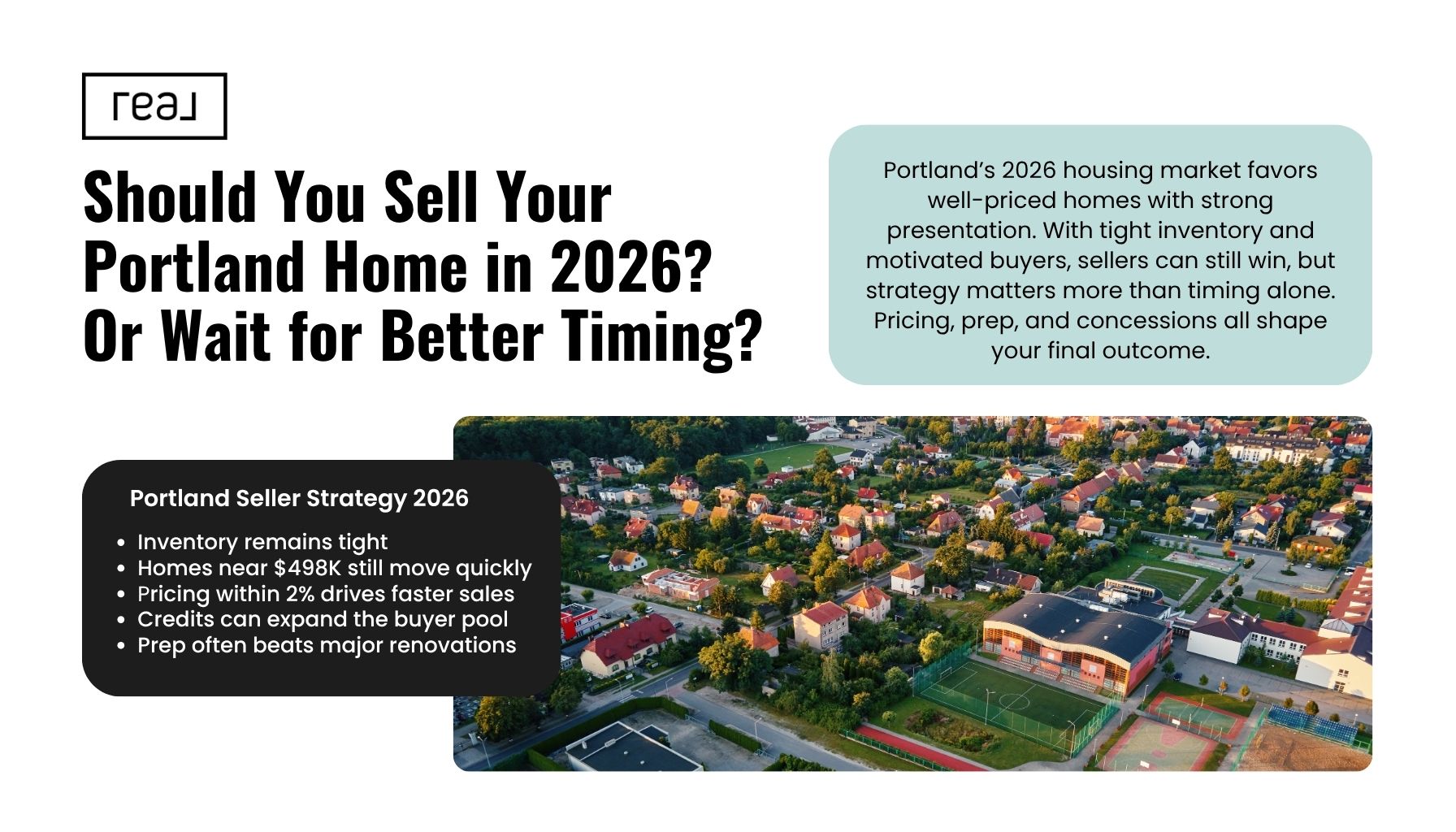
- Portland inventory is tight, with roughly 1.5 months of supply early 2026.
- Median sale price sits near $498,000, with Portland homes pending in 38 days.
- SW Portland hovers around $645,000, while East Vancouver is moving in 25 days.
- Expect 6% commission, plus 1–2% concessions and 3–5% closing costs.
What does selling in 2026 really mean for Portland homeowners?
Selling in 2026 means navigating a low‑inventory environment where well‑priced homes still move quickly. RMLS data indicates the Portland metro’s median sale price is near the high‑$400s to low‑$500s, with typical days on market around 38 in early 2026. In practical terms, that is a seller‑leaning market, though pricing power is neighborhood specific and depends on condition and presentation.
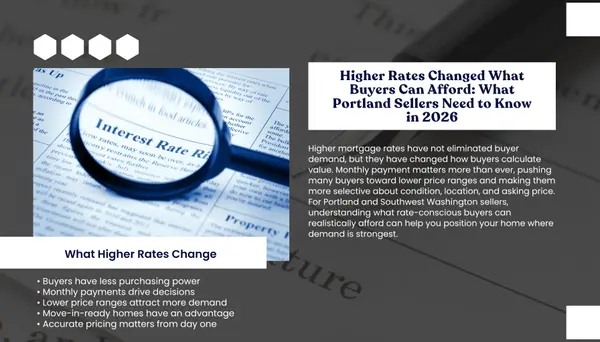
Buyers are budgeting carefully due to interest rates in the mid‑5s to low‑6s, according to the Freddie Mac PMMS. That means strategic pricing and light pre‑listing work often outperform large renovations. A growing share of offers include concession requests, especially rate buydowns, which I help my sellers structure to maximize net proceeds without over‑discounting.
Here is how I define it as Lisa Mehlhoff:
- Price to the last 60–90 days of comps, not the peak of 2022.
- Offer targeted prep, like paint and lighting, that returns at least 3 to 1.
- Use data‑driven strategy sheets to weigh list now versus wait decisions.
How is Portland’s 2026 market performing, and what could change next?
Early 2026 Portland numbers show a resilient market. RMLS Market Action reports point to a metro median near $498,000, with SW Portland around $645,000 and average pending timeline near five to six weeks. Supply remains tight at roughly 1.5 months, which continues to support strong showings and multiple‑offer scenarios for move‑in‑ready listings. Local affordability remains stretched, yet demand persists where commute, schools, and amenities align.
Rates matter. The Freddie Mac PMMS places 30‑year fixed rates in the mid‑5s to low‑6s as of Q1 2026. A one‑point permanent buydown can materially expand the buyer pool, and many lenders model temporary 2‑1 or 1‑0 buydowns that sellers can help fund. Nationally, the FHFA House Price Index still shows long‑run appreciation across most metros, which supports a case for steady values even if monthly fluctuations occur.
What does seasonality mean for your timing?
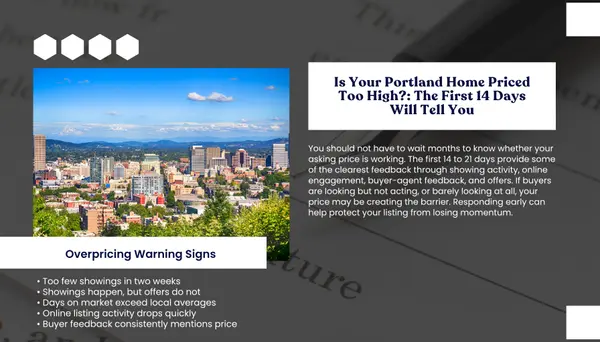
Portland’s strongest listing window typically runs mid‑March through early June, then again after Labor Day. If you plan to sell in 2026, aim for professional photos before blossoms peak, maximize natural light, and price to go pending within 21 days. Longer‑than‑expected time on market usually correlates with overpricing by about 2 to 4 percent.
Which neighborhoods and nearby markets give sellers the best leverage right now?
Neighborhood dynamics vary, and smart pricing starts block by block. As a Portland Oregon Real Estate Agent, I track micro‑trends that produce faster timelines and stronger terms.
- SW Portland - Multnomah Village and Hillsdale
- South Waterfront and Homestead near OHSU
- Lake Oswego
- East Vancouver - Cascade Park, Fisher’s Landing, and The Cedars
- Battle Ground and Brush Prairie
If you are comparing SW Portland Oregon homes for sale with East Vancouver Washington Real Estate, weigh school boundaries, HOA considerations, and commute. I map out scenarios so you see time‑to‑contract and likely buyer profiles before you list.
What are the pros and cons of selling now versus waiting?
Pros:
- Low inventory supports firm pricing, especially for move‑in‑ready properties.
- Rates in the mid‑5s to low‑6s preserve buyer qualification for many budgets.
- Spring traffic boosts showings, and 21‑day pricing often draws multiple offers.
Cons:
- Buyers are asking for concessions, often 1–2 percent toward closing or buydowns.
- Overpricing by 2–4 percent can push you into price cuts and longer timelines.
How do you maximize net proceeds and reduce risk in 2026?
Start with a clean net sheet. Most Portland sellers should plan for around 6 percent in total agent compensation, plus about 3–5 percent in closing costs that include title, escrow, recording, and prorations. In today’s market, I also budget a 1–2 percent reserve for buyer concessions, commonly used for interest rate buydowns. A 0.25 percent fee can reduce the rate by roughly one‑eighth of a point, subject to lender options.
Pre‑inspection and targeted repairs can be game changers. Small fixes often return many times over, while major remodels just before listing rarely pencil. Staging still matters. Light staging plus curb appeal work usually beats vacant showings by widening the pool of emotionally engaged buyers.
One of my clients in Multnomah Village needed to relocate fast. We priced to go pending in two weeks, offered a modest credit for a 1‑0 temporary buydown, and accepted an offer in eight days with a clean appraisal. Their net exceeded holding a month longer by more than their carrying costs.
Another client purchased in The Cedars after selling in Lake Oswego. We aligned both timelines by pre‑marketing their Lake Oswego home, then launched on a Thursday. They accepted a weekend offer with a short rent‑back, which let us negotiate firmly on their East Vancouver purchase. That is the power of synchronized planning across the Portland metro and Clark County corridors.
If you need down‑payment help for your next purchase, start early. Oregon buyers can explore programs through Oregon Housing and Community Services. Washington buyers can review the House Key Opportunity program via the Washington State Housing Finance Commission. I coordinate with your lender to combine timing, pricing, and credits so your net feeds your next move.
FAQs
1) Is spring 2026 still the best time to list in Portland? Yes, spring typically brings the most eyeballs. RMLS activity usually climbs from March through early June, with stronger weekend traffic and more relocation buyers. If your home is photo‑ready and priced within 2 percent of recent comps, you can often secure a contract in 14–28 days. Summer remains solid, and a post‑Labor Day bump is common for well‑located homes.
2) Are buyers really asking for more concessions this year? I am seeing frequent requests for 1–2 percent toward closing costs or interest rate buydowns. With rates in the mid‑5s to low‑6s, credits can unlock better payments, which widens your buyer pool. The goal is packaging credits in a way that preserves your price and appraisal support. I model both net and appraisal likelihood before we accept terms.
3) How do Portland prices compare to nearby Clark County markets? Portland’s median is near the high‑$400s to low‑$500s, with SW Portland close to mid‑$600s. East Vancouver often posts shorter timelines, roughly 25 days when a home shows well. Battle Ground and Brush Prairie offer more space, with timelines around 30–40 days. Cross‑river demand is strong, especially for updated homes with easy I‑205 access and good schools.
4) Should I sell first, then buy, or try to time both? It depends on your financing and risk tolerance. Selling first maximizes certainty and bargaining strength, but may require temporary housing or a rent‑back. Coordinated list‑and‑purchase timelines can work if your home is likely to go pending quickly. I map both paths with estimated timelines, contingencies, and backup strategies so you move once, not twice.
5) Will a pre‑listing inspection help me get a higher price? In many cases, yes. A pre‑inspection eliminates unpleasant surprises and gives you the choice to repair or disclose. That can prevent renegotiations after the buyer’s inspection. For homes near the median, resolving safety items and easy repairs often improves both showing feedback and appraisal outcomes. The cost is modest compared to the leverage it creates during negotiations.
6) Are price cuts common if a listing sits more than 30 days? They are more common when pricing overshoots recent comps by 2–4 percent. The first two weeks are crucial. If we miss, I track showing feedback, online engagement, and competing actives to recommend a targeted adjustment. Often, a focused price improvement plus refreshed marketing brings a new round of buyers back into the conversation.
7) How do national trends affect my Portland sale? Nationally, the FHFA House Price Index shows long‑term appreciation that supports homeowner equity. However, Portland outcomes hinge on hyperlocal factors like school zones, commute options, and nearby inventory. We watch rates through the Freddie Mac PMMS, then tailor pricing to the last 60–90 days of RMLS data for your block and style.
Conclusion
The bottom line If you are weighing a 2026 sale, the fundamentals favor well‑priced, well‑presented homes in Portland and nearby Clark County. Inventory is tight, buyers are motivated, and strategic concessions can expand your audience without sacrificing net. Whether your next move is Lake Oswego, SW Portland, or East Vancouver, I will build a custom plan that times prep, pricing, credits, and closing. Let us review your neighborhood comps and a personalized net sheet, then decide if listing now or waiting a quarter positions you best.
Lisa Mehlhof Homes | License #220603251 Call or text 503-490-4888 https://lisamehlhoffhomes-
Categories
Recent Posts






"My job is to find and attract mastery-based agents to the office, protect the culture, and make sure everyone is happy! "