Are Portland Home Prices Still Falling? How to Read the 2026 Numbers Like a Pro
TLDR
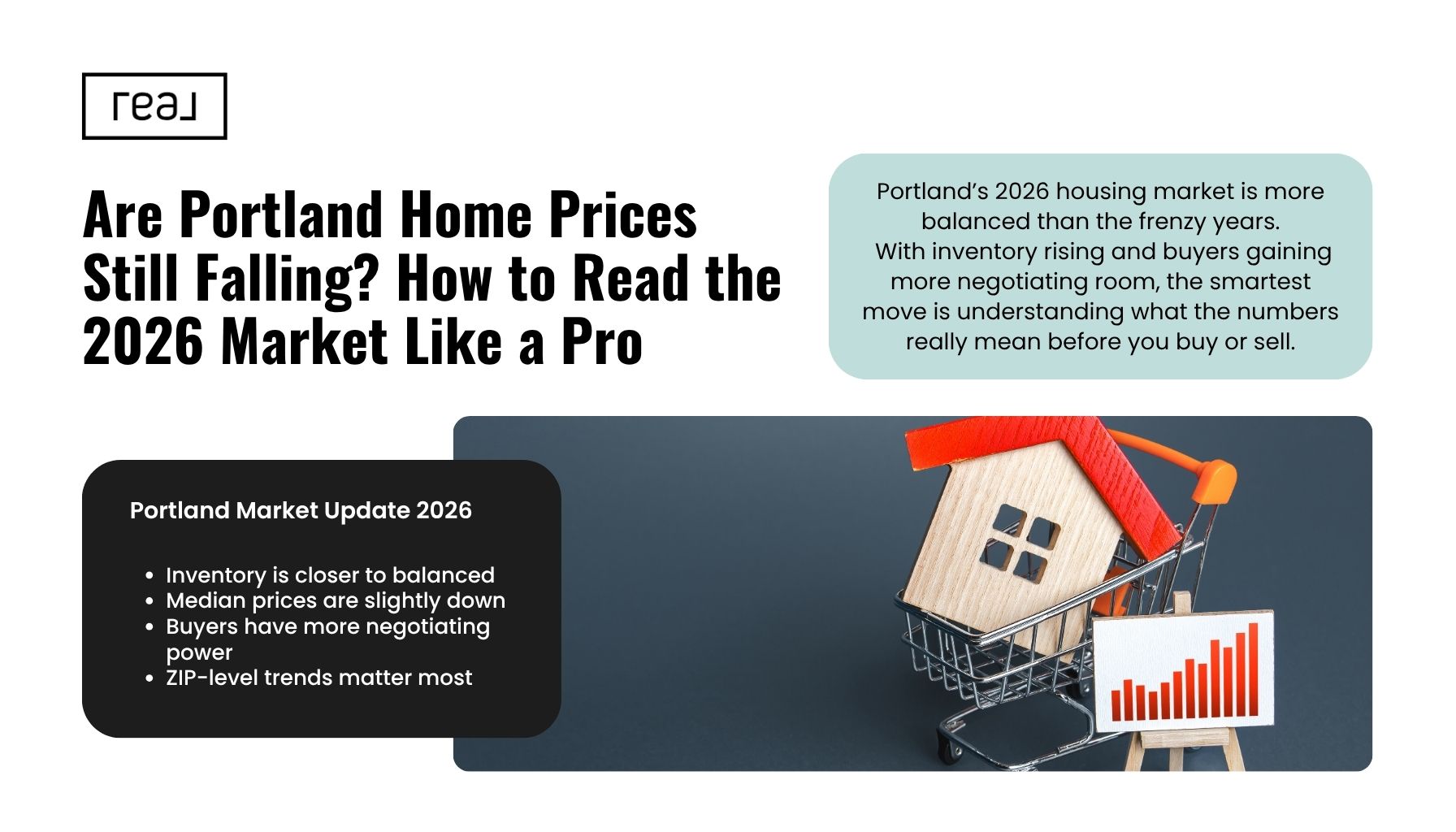
- Portland metro sits near 3.6 months of supply, signaling a balanced market.
- Median sale price around $498,000, down roughly 2.5 percent year over year.
- Buyers often negotiate several percent off ask, especially above five hundred thousand.
- Seasonality returns in spring, so track list to sale gaps by ZIP.
What do the 2026 Portland numbers really say?
Portland’s 2026 housing market looks different than the frenzied days of 2021. The Regional Multiple Listing Service reported roughly 3.6 months of inventory in February, which is a sign of balanced conditions where neither side dominates. The citywide median sale price hovered near 498,000 dollars, approximately 2.5 percent lower than the same period last year. Typical time on market is near six weeks, which means well priced homes still move, while aspirational pricing sits.
Statewide, prices trend a bit higher than the Portland median, reflecting the mix of smaller metros and resort communities. Local and state housing reports show Oregon’s early 2026 median near the mid five hundreds. A balanced market is healthy for long term stability because it enables reasonable contingencies and financing timelines. Compared with the pandemic years, this gives first time buyers and relocators more breathing room.
As your Portland Oregon Real Estate Agent based in SW Portland, I look beyond headlines and focus on how to turn the current numbers into strategy. For a macro lens, I track the FHFA House Price Index and the Portland Housing Needs Analysis to align pricing with local supply, jobs, and demographics.
Here is how I define it as Lisa Mehlhoff:
- Balanced market equals roughly three to five months of inventory with steadier pricing.
- Median sale price changes matter, but list to sale spreads matter more.
- ZIP level data and property condition override citywide averages for offer strategy.
How should buyers and sellers read a balanced market?
In a balanced market, pricing spreads and concessions tell the real story. The median may be down modestly, but buyers still compete in the sub five hundred thousand segment while higher priced listings often negotiate. Local MLS summaries and brokerage reporting show many sales closing under list, with typical negotiation room around six to seven percent in 2025 and early 2026. Sellers who price within one to two percent of comparable sales see shorter market times and fewer repair disputes.
Mortgage rates have eased from their peak, with many buyers locking in the mid fives to six percent range depending on credit and program. That rate backdrop stabilizes monthly payments and supports a wider range of approvals. For context on national rate movement, I watch the FRED 30 Year Fixed Mortgage Rate. Lower volatility in rates means buyers can focus on property fundamentals instead of chasing last minute lender changes.
Why seasonality matters again
Seasonality is back. Historically, prices and activity pick up March through June, then cool late summer. Watching week over week list to pending ratios is crucial for timing. National indices such as S and P CoreLogic Case Shiller show recurring seasonal patterns that often translate locally. Practical takeaway for buyers is to prepare pre approvals in February or early March, and for sellers to list with strong marketing in late March when foot traffic improves.
Where are prices moving by neighborhood in 2026?
Not all neighborhoods move together. Submarkets with starter home price points still attract multiple offers, while higher priced properties require sharper pricing and thoughtful staging. The East Vancouver corridor has seen notable affordability gains, pulling some Portland buyers north for value and schools. Outer Clark County markets such as Brush Prairie and Battle Ground also draw attention for larger lots and commutes near thirty minutes to Vancouver or back to Portland.
- Neighborhood 1
- Neighborhood 2
If you prefer a classic suburban lifestyle south of the city, the Lake Oswego Oregon Real Estate Market remains premium. Pricing is higher for renovated homes, but patient buyers sometimes secure opportunity properties needing updates. For those wanting more land, East Vancouver Washington Real Estate extends to Brush Prairie and Battle Ground, where larger lots and family friendly amenities boost long term appeal. For Clark County economic context, I follow the Washington OFM Monthly Economic Report.
What are the pros and cons of buying now versus waiting?
Pros:
- Balanced inventory gives buyers time for inspections, appraisals, and financing choices.
- Negotiation room has widened, often several percent off list plus credits.
- Spring seasonality supports resale value if you must move again in a few years.
Cons:
- Entry priced SW Portland Oregon homes for sale can still attract multiple offers.
- If rates drift lower, buyer competition could tighten list to sale spreads quickly.
How do you structure offers and negotiations in 2026 to win?
Winning in 2026 is about precision. Start with a true apples to apples CMA by ZIP and property type. In a balanced market, I advise most buyers to aim within one to two percent of fair value, then negotiate repairs through capped credits. Inspection fees typically run 500 to 700 dollars, sewer scopes 150 to 250 dollars, and appraisals 700 to 900 dollars. Closing costs are often two to three percent, partially offset by seller credits when structured correctly.
Rate strategy matters. A seller paid credit to buy down the rate can reduce monthly payments more than a slightly lower price. Many lenders offer float down options if rates drop before funding. For tech professionals with complex income or newer self employment, portfolio lending may solve underwriting hurdles. For physicians relocating to OHSU or Legacy, specialized physician loans with low down payments help conserve cash for post closing improvements.
One of my clients, a first time buyer in Hillsdale, was pre approved to 520,000 dollars but felt payment sensitive. We offered 505,000 dollars on a 525,000 dollar listing with a two percent seller credit to buy down the rate. The seller accepted, and the monthly payment dropped meaningfully while our out of pocket stayed stable.
One of my clients moving from California targeted Cedars in East Vancouver. We pursued a 435,000 dollar home listed at 449,000 dollars after thirty five days on market. By pairing a strong pre approval with flexible closing, we secured a price reduction plus a five thousand dollar credit for minor roof and HVAC servicing. They closed in 32 days and moved in before starting a new job downtown.
FAQs
1) Are Portland home prices still falling in 2026 or flattening now? Prices are modestly lower than last year, with the median near 498,000 dollars and roughly a 2.5 percent year over year dip. The bigger signal is balanced inventory near 3.6 months. That balance tempers declines and points to relative stability. ZIP level spreads vary. Starter homes often hold value best due to concentrated demand.
2) How much under asking price can I realistically offer this spring? It depends on days on market and condition. Many homes that sit longer than three weeks accept several percent below asking, sometimes paired with a seller credit. Popular listings under five hundred thousand dollars may still go at or slightly over. I analyze list to sale ratios by ZIP so your offer reflects true neighborhood dynamics.
3) Is it smarter to buy in Portland or in Vancouver this year? It comes down to budget, taxes, commute, and schools. Portland offers distinct neighborhoods and ADU friendly zoning in places that appeal to long term investors. Vancouver and nearby Cedars, Brush Prairie, and Battle Ground often provide more space and lower price points. We will compare property taxes, HOA dues, commute routes, and school ratings to map total cost of ownership.
4) What closing timeline should I expect in 2026? Most financed deals close in 30 to 45 days. Appraisals can take one to two weeks, inspections a few days, and repairs or credits add several days for negotiation. Jumbo or specialty loans may need extra underwriting time. We can shorten timelines by ordering the appraisal early and using lenders with in house processing.
5) Should I ask for repairs or a seller credit after inspections? Credits are efficient in a balanced market. I often target one to two percent of price as a ceiling for ordinary issues, then reserve true repairs for major safety or system defects. Credits let you control the work after closing and avoid surprises. Lenders typically cap credits, so we coordinate with your loan officer before finalizing terms.
6) How are mortgage rates trending and what can I do about them? Rates have eased from prior highs and many buyers in 2026 are locking around the mid fives to sixes depending on profile. Follow national data from FRED for context. On each offer, I model payment scenarios showing a seller credit for a temporary or permanent buydown to maximize monthly affordability.
7) What neighborhoods work best for first time buyers right now? For value and commute balance, Cedars East Vancouver and parts of Lents or Brentwood Darlington can be smart entry points. In SW Portland, watch Maplewood and areas near Multnomah Village for smaller homes with strong amenities. Expect to act quickly under five hundred thousand dollars. Pre approvals, early tours, and clear inspection strategies create the winning edge.
Conclusion
The bottom line Portland’s 2026 market is steady, nuanced, and highly local. Citywide, prices sit a touch below last year while inventory hovers in balanced territory near 3.6 months. That combination opens doors for buyers to negotiate price and credits, especially above five hundred thousand dollars, and helps sellers succeed with realistic pricing and strong presentation. Whether you are focused on SW Portland Oregon homes for sale, evaluating Cedars East Vancouver WA Real Estate, or curious about the Lake Oswego Oregon Real Estate Market, reading the numbers by ZIP and property type is everything. I would love to help you translate today’s data into a winning plan.
Lisa Mehlhof Homes | License #220603251 Call or text 503-490-4888 https://lisamehlhoffhomes-
Categories
Recent Posts










"My job is to find and attract mastery-based agents to the office, protect the culture, and make sure everyone is happy! "