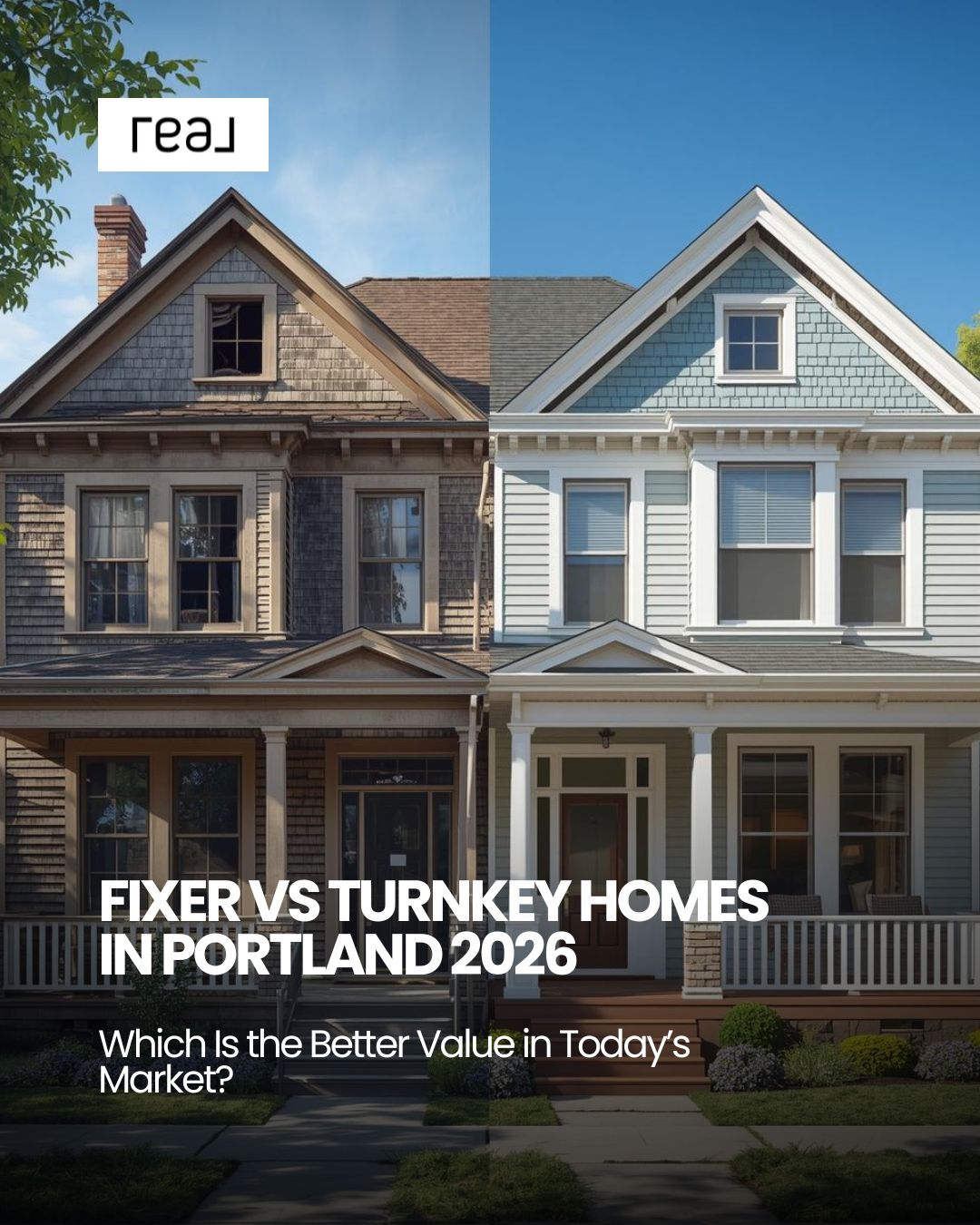
Is it Cheaper to Buy a Fixer With a Renovation Loan, or Has Labor Made Turnkey Homes a Better Value in 2026?
TLDR
- Labor costs and contractor scarcity often erase fixer savings over $50,000.
- Turnkey premiums run 10-15 percent, but carry fewer surprises and faster move-in.
- Cosmetic fixers under $25,000 can still pencil with realistic timelines and bids.
- Neighborhood and loan choice matter more than headlines in 2026 budgeting.
What does “fixer with a renovation loan” really mean?
A fixer can be a smart path if you buy the right house at the right price and control the scope. In Portland, most first-time buyers pair fixers with either FHA 203(k) or Fannie Mae HomeStyle. Both wrap purchase and renovation costs into one mortgage. Typical fee premium is 1-2 percent of the loan, and funds are released in draws tied to inspections and milestones.
Labor is the swing factor in 2026. Local contractor rates have climbed to about 75 to 120 dollars per hour compared with 50 to 70 dollars in 2018. That inflation shows up in every line item, from drywall to electrical. When scopes cross 50,000 dollars, the math often favors a move-in ready home, especially when you factor carrying costs and missed work days.
Here is how I define it as Lisa Mehlhoff:
- A “cosmetic fixer” is primarily paint, floors, lighting, and minor carpentry under 25,000 dollars.
- A “moderate fixer” includes kitchens or baths, some systems work, and likely permits.
- A “major fixer” touches structural, roof, foundation, or full systems replacement.
How do current Portland and Vancouver numbers affect the choice?
Local pricing sets your baseline. As of December 2025, the Portland median single-family price sits near 540,000 dollars with an average price per square foot around 308 dollars. Days on market hover near 32, and active inventory is roughly a balanced 2.8 months of supply. In East Vancouver and adjacent Clark County, median single-family price is about 500,000 dollars with approximately 3.5 months of supply and 28 days on market. These conditions mean buyers can still negotiate, especially in winter.
Turnkey homes in Inner Portland neighborhoods often command a 10-15 percent premium over after-repair value because move-in ready is scarce and convenient. Renovation loan buyers face not just the 1-2 percent loan fee premium, but also markup on materials and trades. Concessions have moderated to roughly 5,000 to 10,000 dollars on average this winter, which can tilt a nearly turnkey home into your budget range without construction stress. I watch Regional MLS data monthly and coordinate with the Oregon Association of REALTORS for statewide trend context.
What about national context?
Nationally, the FHFA House Price Index shows continued resilience in many metros through late 2025, although appreciation rates vary by region. NAR’s research also tracks tighter affordability driven by rates and supply. The takeaway for Portland buyers is simple: in a balanced-to-slightly-tight market, renovation risk needs to be appropriately discounted up front to beat a turnkey option. See national overviews at the FHFA House Price Index and NAR Research.
Where do fixers still pencil versus turnkey in our neighborhoods?
Neighborhood dynamics matter. In 15-minute neighborhoods with strong retail and school access, turnkey pricing captures convenience value. In edge or emerging areas, fixers can still pencil if you buy right and keep scope tight.
- Sellwood-Moreland
- Richmond
- St. Johns
- Lents Town Center
- Tigard and Beaverton in SW Portland
- Cedars in East Vancouver
What are the pros and cons of renovation loans versus turnkey?
Pros:
- Ability to finance improvements at mortgage rates instead of higher personal loans.
- Customize finishes and layout to your lifestyle, including smart-home and EV features.
- Potential equity lift if scope stays under budget and market holds through completion.
Cons:
- Labor at 75-120 dollars per hour strains budgets, especially over 50,000 dollars.
- Draw schedules, inspections, and permits can add 30-60 days to timelines.
- Carrying costs, temporary housing, and surprise change orders reduce savings.
How do I budget, structure, and time a renovation in 2026?
Start with a hard bid from a licensed contractor and a backup bid from a second firm. In 2026, I recommend a 10-15 percent contingency for cosmetic projects and 15-20 percent when walls open. Expect cabinet lead times and scheduling friction to extend timelines. For a 500,000 dollar purchase, a 50,000 dollar renovation with a 203(k) or HomeStyle can easily total 55,000 to 60,000 dollars once you add fees and contingencies.
If your scope is truly cosmetic under 25,000 dollars, a fixer can beat the 10-15 percent turnkey premium in Richmond or Sellwood. Over 50,000 dollars, turnkey often wins on total cost and stress. In Vancouver, newer housing stock in the Cedars means many “fixers” are light cosmetic, which favors buyers. For buyers searching SW Portland Oregon homes for sale, the math is similar because schools drive demand and support turnkey pricing.
One of my clients, a tech couple relocating to Portland, targeted a Richmond bungalow. With a 30,000 dollar cosmetic scope, they saved about 8 percent compared with a comparable turnkey listing, moved in eight weeks later, and captured equity on appraisal. Another client, a military family shopping Battle Ground and Brush Prairie WA homes for sale with a VA preapproval, chose a nearly turnkey home plus a 10,000 dollar seller credit for a rate buydown. Their carrying costs stayed lower than a 60,000 dollar renovation would have allowed.
If you are evaluating East Vancouver Washington real estate or Cedars East Vancouver WA real estate, keep HOA timelines in mind and budget for architectural approvals. For ADU or cottage-cluster questions in Portland, review local rules with the Bureau of Planning and Sustainability and permit pathways before you write an offer.
FAQs
1) Which loan is better for a fixer in Portland, FHA 203(k) or HomeStyle? Both work. FHA 203(k) suits first-time buyers who need minimum down payment flexibility and can live with FHA’s property standards. HomeStyle can be more flexible on improvements and works well for buyers with stronger credit and larger down payments. Both include draw inspections and a 1-2 percent fee premium. Talk to your lender and compare contractor requirements before you write.
2) How much contingency should I set aside in 2026? Plan 10-15 percent for cosmetic scopes and 15-20 percent when you open walls or touch plumbing and electrical. Portland’s older housing stock can hide knob-and-tube wiring, cast iron sewer issues, and seismic needs. In Clark County, newer homes reduce hidden risks but watch permitting and HOA review timing. A solid inspection and sewer scope can save thousands and reset your bid before closing.
3) Do VA, USDA, or physician loans allow renovations? VA and USDA have limited renovation options. Many clients instead buy nearly turnkey and use seller credits for rate buydowns or small repairs. Physicians using specialized programs often prefer HomeStyle for flexibility. Always confirm lender overlays, appraisal requirements, and contractor approval steps in writing. For VA loan resources, visit the VA Home Loans site or the VA Regional Loan Center.
4) How long do permits take in Portland and Vancouver for common projects? Cosmetic work often requires no permits. Kitchen and bath remodels with electrical or plumbing typically need permits. In Portland, simple permits can be issued quickly, while complex scopes may take several weeks. Clark County timelines are often comparable or a bit faster depending on scope. Check the City of Portland and Clark County Community Development for current queues.
5) Will an appraisal recognize the future value of my renovation? Renovation loans rely on after-improved value when the scope is well documented. Appraisers review plans, bids, and comps. In balanced markets with 2.8 to 3.5 months of supply, appraisals can be conservative. Keep your scope realistic and your budget documented. I provide comps from the Regional MLS and align contractor bids with the items that move value, such as kitchens, baths, and essential systems.
6) Are ADUs or cottage clusters a viable strategy to offset costs? Yes, under Portland’s Residential Infill Project, detached ADUs up to about 800 square feet are common, and cottage clusters are possible on some lots with specific rules. Expect roughly 20,000 dollars in permitting and SDCs to start, before construction costs. This is a separate, larger investment than a cosmetic fixer. Review the Bureau of Planning and Sustainability resources before planning an income-producing addition.
7) How do seller concessions and rate buydowns compare to renovation savings? Concessions in winter often range from 5,000 to 10,000 dollars. A 0.25 percent permanent buydown on a 500,000 dollar loan might cost around 7,000 dollars, and a 1 percent reduction can exceed 20,000 dollars. If your scope is light, concessions can tip a nearly turnkey home into budget. If your scope is heavy, savings can vanish due to labor, fees, and longer timelines.
Conclusion
The bottom line For 2026, the answer is practical, not romantic. If your renovation scope stays under 25,000 dollars and you bought with a real discount, a fixer can beat the 10-15 percent turnkey premium in many Portland neighborhoods. Once scopes push beyond 50,000 dollars, higher labor costs, timelines, and fees often make turnkey the better value, especially in high-demand pockets like Sellwood-Moreland, Richmond, and Alberta Arts. In East Vancouver, where stock skews newer, light cosmetic fixers shine. As your Portland Oregon real estate agent, I will model both paths with real numbers, confirm contractor bids, and negotiate credits so you can decide with confidence.
Lisa Mehlhof Homes | License #220603251 Call or text 503-490-4888 https://lisamehlhoffhomes-
Categories
Recent Posts











"My job is to find and attract mastery-based agents to the office, protect the culture, and make sure everyone is happy! "