Remote Work, Home Gyms, and Multi‑Use Spaces: How 2026 Buyers Are Redefining ‘Must‑Have’ Features
TLDR
- Buyers want quiet offices, flexible rooms, and wellness spaces that adapt long term.
- Portland and SW Washington’s tight supply rewards homes with turnkey flexible layouts.
- Smart upgrades like soundproofing and EV-ready garages drive value and faster sales.
- Plan budgets, timelines, and credits early to win in competitive submarkets today.
What does “must‑have” really mean in Portland and SW Washington in 2026?
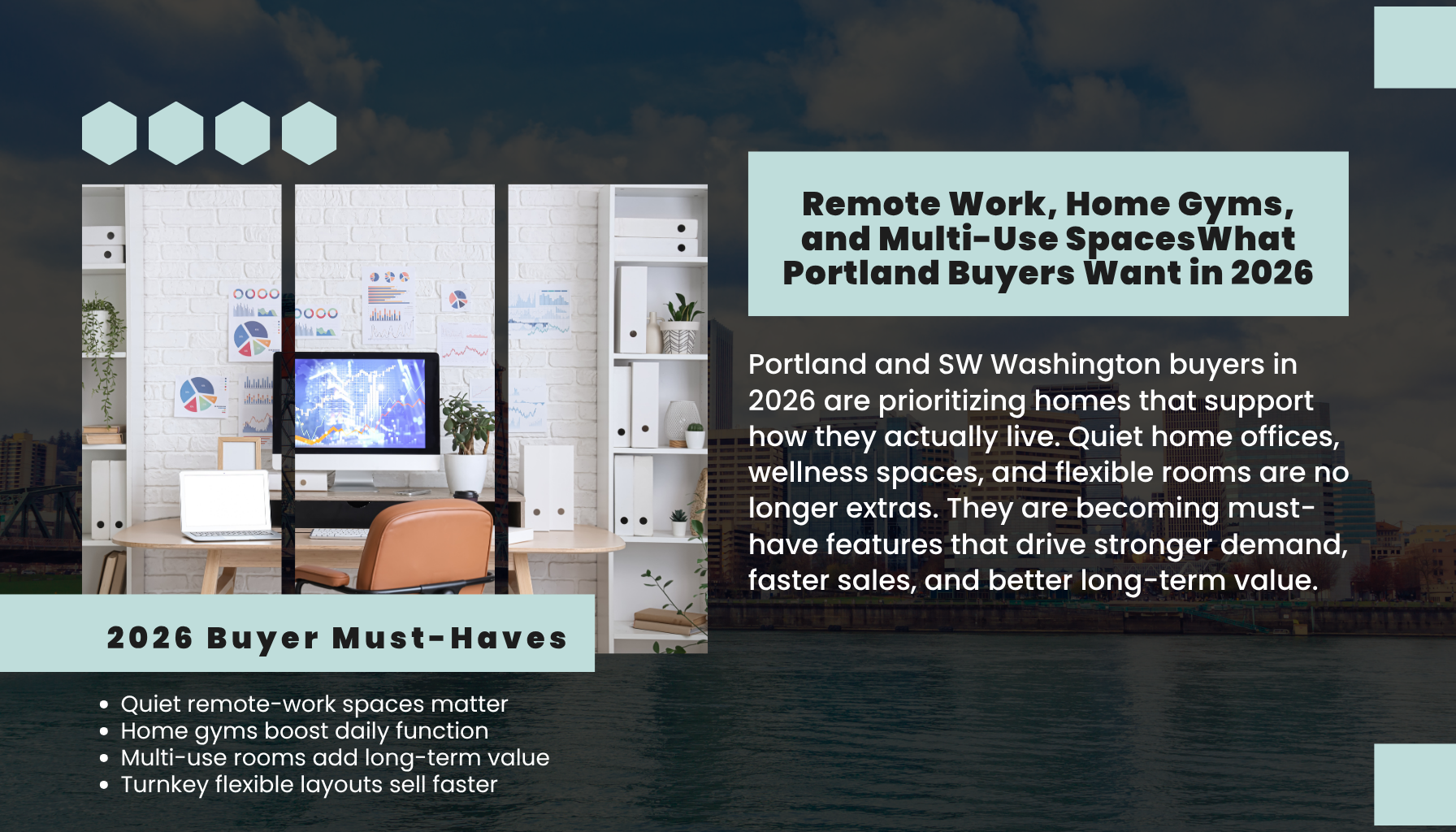
“Must‑have” used to mean three bedrooms and a backyard. In 2026, it means a dedicated remote‑work setup, a space for fitness and wellness, and rooms that flex as your life evolves. In today’s market, well‑executed functional space is not a luxury add‑on, it is central to livability and resale.
Local conditions make these features even more decisive. Regional MLS data shows Portland metro’s median sale price hovering near $500,000 in early 2026, with typical homes pending in roughly 38 to 42 days. Southwest Portland’s median near $645,000 reflects ongoing demand for close‑in neighborhoods with larger footprints. Just across the river, East Vancouver areas post medians near the high $400,000s, with days on market closer to 25 and lean inventory. Months of supply remains tight in Portland at about 1.5, while some East and West Vancouver neighborhoods function closer to a half‑month of supply. That combination means buyers compete hardest for homes that already solve daily needs like quiet calls, workout space, and kid‑friendly flex rooms.
Here is how I define it as Lisa Mehlhoff:
- A remote‑ready office with privacy, high‑speed internet, and good light.
- A wellness zone for strength, cardio, yoga, or recovery that is easy to maintain.
- A convertible bonus area that can toggle between guest room and playroom.
How do remote work and wellness trends translate into market value?
When I advise buyers and sellers, we talk about value in two layers: daily function and measurable market impact. Daily function shows up in buyer feedback and speed to offer. Market impact shows up in comps and appraisals. In 2026, the best returns come from upgrades that combine comfort and clear comparables. Think acoustic control, integrated storage, and connectivity alongside tasteful finishes.
Mortgage rates have moderated from pandemic lows yet remain in the mid‑5 to low‑6 percent range for many borrowers. You can track national averages via the Freddie Mac Primary Mortgage Market Survey at Freddie Mac PMMS. With rates steady and inventory lean, homes that check the remote‑work and wellness boxes can attract multiple offers, especially in SW Portland and select East Vancouver pockets. Long‑run stability also matters. The FHFA House Price Index shows steady multi‑decade appreciation across Oregon and Washington, which supports investing in enduring, flexible spaces over short‑lived trends.
What upgrades do buyers and appraisers consistently recognize?
- Connectivity: wired Ethernet or robust mesh Wi‑Fi, and a clear path to gig‑level service.
- Sound and light control: door seals, rugs, bookcases, window treatments, or a glazed partition.
- Purposeful storage: built‑ins for gear and files so spaces present clean and multifunctional.
Which neighborhoods are best for flexible, wellness‑forward living?
Across the metro, I see predictable patterns. Close‑in homes with finished basements or bonus rooms sell faster when staged as dual‑purpose spaces. Farther out, larger lots support detached studios and garage conversions. As a Portland Oregon Real Estate Agent, I guide clients daily in matching layouts and budgets to the submarkets they love.
- Neighborhood 1
- Neighborhood 2
I also coach relocating families targeting the Lake Oswego Oregon Real Estate Market, where First Addition and Lake Grove command premium pricing for walkability and school access. There, immaculate built‑ins and quiet studies are key differentiators. Farther north, Brush Prairie and Battle Ground offer larger footprints for hybrid households and multi‑generational needs. East Vancouver Washington Real Estate often delivers the best speed‑to‑offer when the home is truly move‑in ready.
What are the pros and cons of transforming space versus moving?
Pros:
- Immediate function without giving up your neighborhood or commute pattern.
- Lower transaction costs compared to selling and rebuying in a tight market.
- Custom fit for your work style, gear, and wellness routine.
Cons:
- Not all homes can achieve great acoustics or light without structural changes.
- Permits and contractor schedules can stretch timelines in peak season.
- Over‑customization may limit broad buyer appeal at resale if trends shift.
If you love your block and just need an office and gym, lightly transforming space often wins. If your household is growing and you need an extra bedroom plus a flex den, a strategic move may beat a complex remodel. I routinely run side‑by‑side cost and appraisal scenarios using MLS comps so clients can compare financial outcomes before they commit.
How do I plan, budget, and negotiate for these features in 2026?
Start with the basics. Set target internet and power specs, map noise paths, and define your must‑have list before you tour homes. For most buyers I recommend:
- Internet: target a gig‑capable provider, or verify fiber path availability. You can cross‑check local network availability and compare to national trends through FRED mortgage and economic data and utility maps.
- Power: dedicate a 20‑amp circuit for equipment, consider 240V for EV and heavy cardio.
- Sound: budget for weather‑stripping, rugs, shelving, and soft finishes to absorb noise.
Typical cost ranges in our market:
- Home office tune‑up with lighting, paint, and built‑ins: $2,500 to $7,500, two to four weeks.
- Garage gym conversion with insulation and flooring: $3,500 to $12,000, one to three weeks.
- Detached backyard studio or small flex shed: $35,000 to $95,000 for prefab, eight to sixteen weeks including site prep. Custom ADUs are more, and require permits with longer lead times.
Negotiation still matters. In Q1 2026, I am seeing seller concessions in the 1 to 2 percent range toward buyer closing costs or rate buydowns in several Portland submarkets. That can free budget for your office or gym on day one. For financing and rate context, check the Freddie Mac PMMS. First‑time buyers should also explore programs at Oregon Housing and Community Services and the Washington State Housing Finance Commission House Key program.
One of my clients, a tech couple relocating for hybrid roles, chose Hillsdale. We targeted a daylight basement with existing egress, then negotiated a closing credit that covered custom shelving, a murphy bed, and acoustic panels. They were fully set up within three weeks. Another client, a physician joining OHSU, needed an upstairs study with door separation and quick access to the tram. We focused on South Waterfront and Eastmoreland, and our winning offer included a short inspection period plus a modest seller credit that funded a glass partition and smart lighting. For hospital adjacency and commute mapping, see OHSU locations.
FAQs
1) Do dedicated home offices actually add appraised value in Portland and Vancouver? Appraisers recognize permanent improvements, quality finishes, and livable square footage. A den with a door and built‑ins is more compelling than a corner desk. Expect the strongest return when your office aligns with comparable homes in the neighborhood. In multiple‑offer scenarios, a turnkey office often improves time to contract and can support top‑of‑range pricing identified through MLS comps and local appraisals.
2) What internet speeds should I target for remote work and multi‑user households? Aim for at least 500 Mbps down and 50 to 100 Mbps up for smooth video calls, cloud sync, and smart home traffic. Many neighborhoods support gig service, so verify provider options and fiber paths during due diligence. A hard‑wired Ethernet drop to your office is ideal. Mesh systems help in older homes with plaster walls. Confirm provider terms in writing before closing.
3) How much does a safe, durable garage gym conversion cost locally? Simple conversions with rubber flooring, mirrors, lighting, and a portable heater or mini split typically run $3,500 to $8,000. Add insulation, drywall, and upgraded electrical and you may land between $8,000 and $12,000. Choose moisture‑resistant finishes and maintain egress. If you need a conditioned, fully finished space for resale appeal, plan for added insulation and a permitted HVAC solution.
4) Should I buy larger now or add a detached studio or ADU later? It depends on location, permit timelines, and your budget. In Portland, permits for detached structures can add time and cost, while Clark County jurisdictions may be quicker for simple outbuildings. Buying an existing layout with a bonus room is usually faster and cheaper. If you want rental income or long‑term flexibility, a detached studio or ADU can pay off over time with proper design.
5) What should doctors relocating to OHSU or Providence consider first? Prioritize commute reliability, quiet studies for charting, and proximity to parks for decompression. Neighborhoods like South Waterfront, Lair Hill, Eastmoreland, and Laurelhurst offer different commute profiles. Evaluate on‑call routes and parking before you write. I also review noise exposure and room separation so late‑night calls do not wake the household. For hospital mapping, start with OHSU locations.
6) How can VA and first‑time buyers compete for move‑in‑ready flex spaces? Get fully underwritten approvals, request rate buydowns or closing credits rather than deep price cuts, and offer clean timelines. Leverage down‑payment assistance where eligible at Oregon Housing and Community Services or WSHFC House Key. Consider East Vancouver Washington Real Estate for quicker days on market and efficient floor plans. A strong, simple offer plus a short inspection window can beat higher prices.
Conclusion
The bottom line Buyers in 2026 are not chasing square footage alone. They are investing in quiet offices that support careers, wellness spaces that keep families active, and multi‑use rooms that flex with life. In a market with roughly 1.5 months of supply in Portland and even leaner inventory in parts of Clark County, the homes that deliver these features sell faster and for stronger prices. Whether you want SW Portland Oregon homes for sale with finished basements, turnkey options in the Cedars East Vancouver WA Real Estate corridor, or to understand the Lake Oswego Oregon Real Estate Market, I can help you match layout, budget, and neighborhood. Let’s design your next move around how you live and work today.
Lisa Mehlhof Homes | License #220603251 Call or text 503-490-4888 https://lisamehlhoffhomes-
Categories
Recent Posts







"My job is to find and attract mastery-based agents to the office, protect the culture, and make sure everyone is happy! "