Where Portland Is Quietly Booming in 2026: Neighborhoods to Watch
TLDR
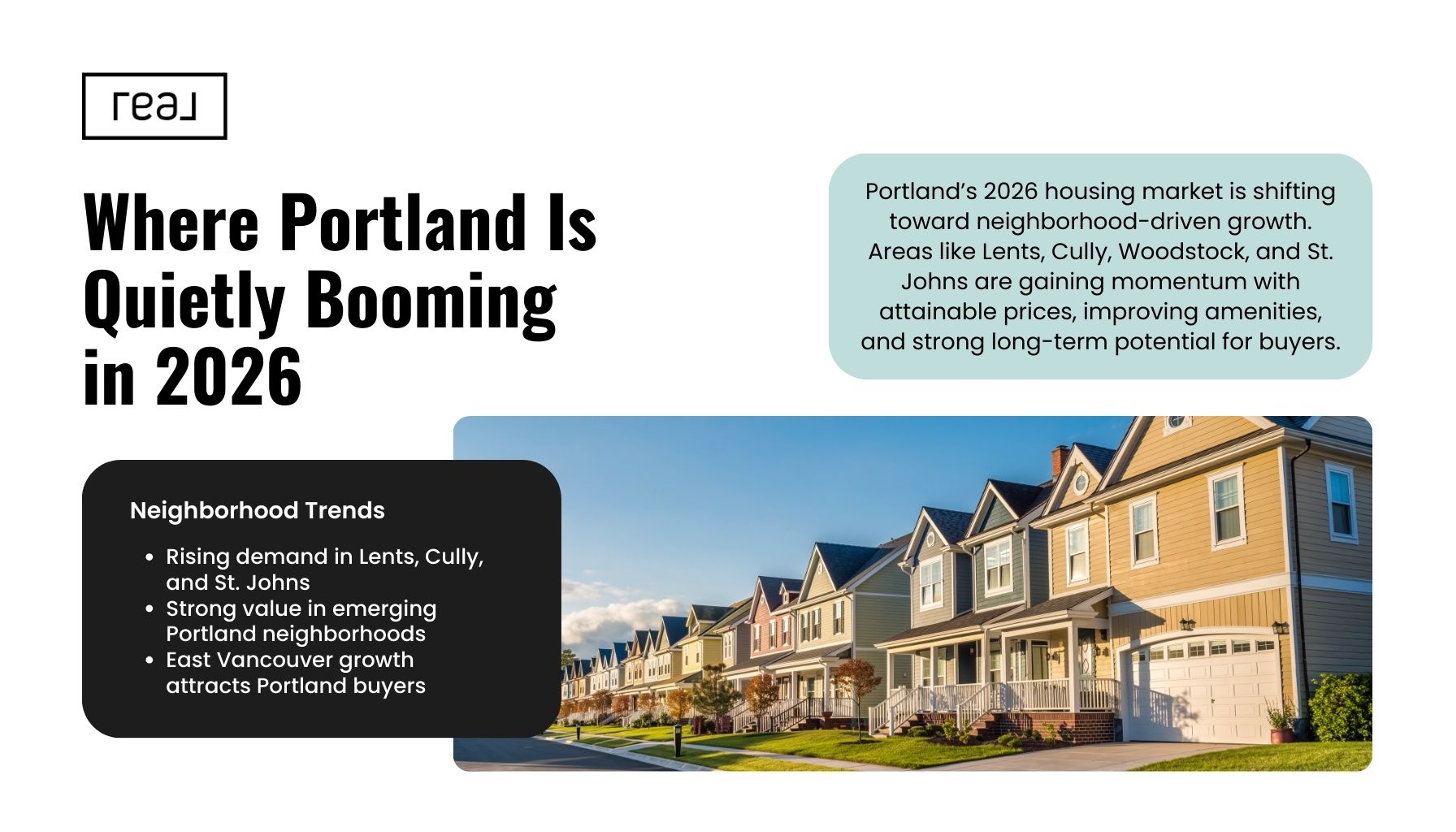
- Lents, Cully, Woodstock, and St. Johns are gaining momentum with attainable prices.
- Cedars in East Vancouver offers growth, amenities, and tax advantages for commuters.
- Inventory sits near 2.3 months, still favoring sellers on well-priced homes.
- Buyers win with prep, flexible terms, and neighborhood-specific negotiation strategies.
What does “quietly booming” really mean for Portland in 2026?
Portland’s market has cooled from the frenzy, yet select pockets are quietly accelerating. Regional MLS trend reports show a February 2026 median sale price near 498,000 for single-family homes, roughly 2 to 3 percent lower than last spring. Inventory remains tight, at about 2.3 months of supply in January, which still tilts slightly toward sellers. The difference in 2026 is that value is increasingly neighborhood specific, driven by schools, transit access, and targeted redevelopment.
A balanced market is 4 to 6 months of inventory. We are not there yet, but conditions are closer to balance than in 2021 and 2022. In 2025, more than half of Portland homes sold below asking, with average discounts near 6.6 percent according to MLS summaries. That means savvy buyers are finding negotiating room, especially in homes that need minor updates or have been on the market longer than the neighborhood average.
Here is how I define it as Lisa Mehlhoff:
- Price trends and absorption are improving at the neighborhood level, not citywide.
- Public investment and private infill are catalyzing livability and future appreciation.
- Buyer leverage varies street by street, so comps need hyperlocal precision.
How do jobs, transit, and planning shape 2026 growth hot spots?
Growth follows jobs, transit, and zoning flexibility. Portland’s TriMet network and freeway corridors still dictate buyer demand patterns, especially for relocators and first-time buyers who balance commute with affordability. From SW and East Portland, typical car commutes to downtown take 20 to 30 minutes in normal traffic. Neighborhoods near MAX lines, frequent bus routes, and protected bike infrastructure are absorbing new residents as work-from-home lifestyles require occasional rather than daily commuting.
City planning also matters. Inner eastside corridors with mixed-use zoning and accessory dwelling unit potential are attracting investors and homeowners who want rental flexibility. Neighborhoods like Cully and Lents are seeing incremental upgrades through small-scale infill, streetscape improvements, and local retail expansions. Portland’s long-range planning outlines the need for more housing capacity and targeted growth around transit, which supports these emergent pockets.
I recommend reviewing adopted planning frameworks for long-term signals:
- Portland Housing Needs Analysis, 2045
- TriMet system and route maps
- C-TRAN Express service to Portland
What does a balanced market look like for Portland buyers in 2026?
A balanced market usually sees 4 to 6 months of inventory, modest appreciation near 3 to 5 percent annually, and fewer bidding wars. With Portland at roughly 2.3 months, well-priced listings still move quickly, though buyers often retain inspection, appraisal, and repair negotiation power. Nationally, indices like the S&P CoreLogic Case-Shiller show moderating growth, and locally we are experiencing that moderation most in homes that need cosmetic work or lack turnkey staging.
Which neighborhoods are best to watch in 2026?
I focus on areas where livability is rising, commute options are solid, and prices are still approachable relative to the metro. Think of these as places where a solid renovation and smart timing can compound appreciation.
- Cully (NE Portland)
- Lents (SE Portland)
- St. Johns (North Portland)
- Woodstock (SE Portland)
- Cedars, East Vancouver, WA
SW Portland is also worth watching. Hillsdale, Multnomah Village, and South Burlingame offer tree-lined streets, strong elementary options, and proximity to Terwilliger Parkway. SW Portland Oregon homes for sale that are priced accurately still attract multiple offers, yet buyers can sometimes negotiate for repairs or credits when days on market creep above the local median.
What are the pros and cons of targeting emerging neighborhoods?
Pros:
- Lower entry prices with room for equity growth through light renovations.
- Access to improving transit, parks, and retail that support future demand.
- More flexibility to use FHA, VA, and down payment assistance programs.
Cons:
- Condition variability that requires careful inspections and contractor planning.
- Competition on the rare turnkey listing can still be intense.
How do I prepare, budget, and write a winning offer for these areas?
Preparation wins in this market. First-time buyers usually target 350,000 to 450,000 in Portland proper, or 425,000 to 550,000 in nearby suburbs and East Vancouver Washington Real Estate. Get fully underwritten pre-approval, set aside 2 to 3 percent for closing costs, and budget for inspections and immediate repairs. Pre-inspections can strengthen offers in competitive spots, especially for SW Portland Oregon homes for sale that are professionally staged.
I often use strategies like modest escalation clauses capped near 2 percent above list, flexible closing windows that match the seller’s needs, and earnest money around 2 to 3 percent. In 2026, many sellers value certainty. Showing that your financing is locked and your contingencies are thoughtfully structured can edge out a slightly higher bid with weaker terms.
One of my clients, a tech professional relocating from California, prioritized high-speed internet and a short commute to South Waterfront. We focused on Woodstock and St. Johns, wrote two offers, and secured credits for roof maintenance after a thorough inspection. Another client, a military family commuting via I-5, purchased near the Cedars East Vancouver WA Real Estate corridor with a VA loan, leveraging an appraisal contingency and a slightly longer close to coordinate PCS timing.
Key cost and timeline notes:
- Typical inspection packages run 450 to 700, appraisals 600 to 800.
- Closing timeline averages 30 to 45 days with conventional, 35 to 50 with VA.
- Down payment assistance is available through Oregon Housing and Community Services.
- Homebuyer education is available via Home Forward, and Clark County programs through Community Development.
FAQs
1) Is now a good time to buy in Portland’s emerging neighborhoods? For well-prepared buyers, yes. Inventory sits near 2.3 months, which still favors sellers on well-priced homes, yet 2025 MLS data showed meaningful discounts citywide. That creates opportunity for buyers who are flexible on condition and timeline. If you can move fast on pre-approval, complete inspections early, and negotiate credits, you can often capture value that compounds over time.
2) Which areas are best for a sub-500,000 budget? Cully, Lents, and parts of St. Johns and Woodstock remain solid options. Focus on homes that need light to moderate updates, especially those sitting on the market 14 days or longer. In Washington, East Vancouver neighborhoods near the Cedars corridor can offer newer builds at competitive prices, along with potential property tax savings. Strong pre-approval and quick inspections help you win without overbidding.
3) How does East Vancouver compare to Portland for commuting and costs? East Vancouver provides efficient access to I-205 and C-TRAN Express routes, which support predictable commutes to Portland. Median values around 530,000 to 550,000 reflect newer housing stock and popular amenities. Many buyers find lower property taxes and HOA-managed neighborhoods appealing. If your work is downtown Portland, plan for bridge traffic timing, then weigh that against space, price, and school preferences.
4) What does a balanced market mean for pricing in 2026? A balanced market is typically 4 to 6 months of inventory. Portland is tighter than that, near 2.3 months, so turnkey homes still move quickly. However, appreciation has moderated, and buyers retain leverage on inspection and condition. Expect fewer bidding wars than recent peak years, with typical price growth closer to 3 to 5 percent when homes are accurately priced and well presented.
5) How competitive are SW Portland Oregon homes for sale right now? SW neighborhoods like Hillsdale and Multnomah attract strong demand for schools, parks, and close-in convenience. Competition is highest on updated homes priced in line with recent comps. Sellers who pre-inspect and stage often command faster closings. Buyers who bring flexible rent-backs, solid financing, and right-sized escalation clauses can win without sacrificing critical protections like inspection contingencies or appraisal safeguards.
6) What should relocating doctors or tech professionals prioritize? Proximity to OHSU, South Waterfront, and major employment centers remains key. Look for reliable high-speed internet, dedicated office or flex space, and easy access to TriMet or freeway corridors. Woodstock, St. Johns, and parts of SW Portland balance lifestyle with commute. If your price point is above 700,000, also benchmark against the Lake Oswego Oregon Real Estate Market for schools, amenities, and long-term stability.
7) Can military families use VA loans across Oregon and Washington? Yes. VA financing works on both sides of the Columbia River. In Clark County, sellers are well versed in VA appraisals and timelines, and many are open to minor repairs if it helps the deal close. Coordinate with your lender on appraisal turn times, and consider C-TRAN Express routes for commute planning. I tailor offer structures to align with PCS schedules and base proximity.
Conclusion
The bottom line Portland’s quiet growth is happening where transit, planning, and community investment intersect. In 2026, Cully, Lents, St. Johns, and Woodstock offer attainable prices with improving amenities, while Cedars in East Vancouver delivers convenience and value for cross-border commuters. With inventory near 2.3 months, smart preparation, flexible terms, and neighborhood-specific comps give buyers a clear edge. As a Portland Oregon Real Estate Agent, I help you target the right streets, write winning offers, and position for long-term equity. If you are comparing these areas with the Lake Oswego Oregon Real Estate Market or exploring East Vancouver Washington Real Estate, I will help you weigh schools, commute, and appreciation potential.
Lisa Mehlhof Homes | License #220603251 Call or text 503-490-4888 https://lisamehlhoffhomes-
Categories
Recent Posts










"My job is to find and attract mastery-based agents to the office, protect the culture, and make sure everyone is happy! "