Why Your Portland Home Didn’t Sell the First Time (and How to Fix It)
TLDR
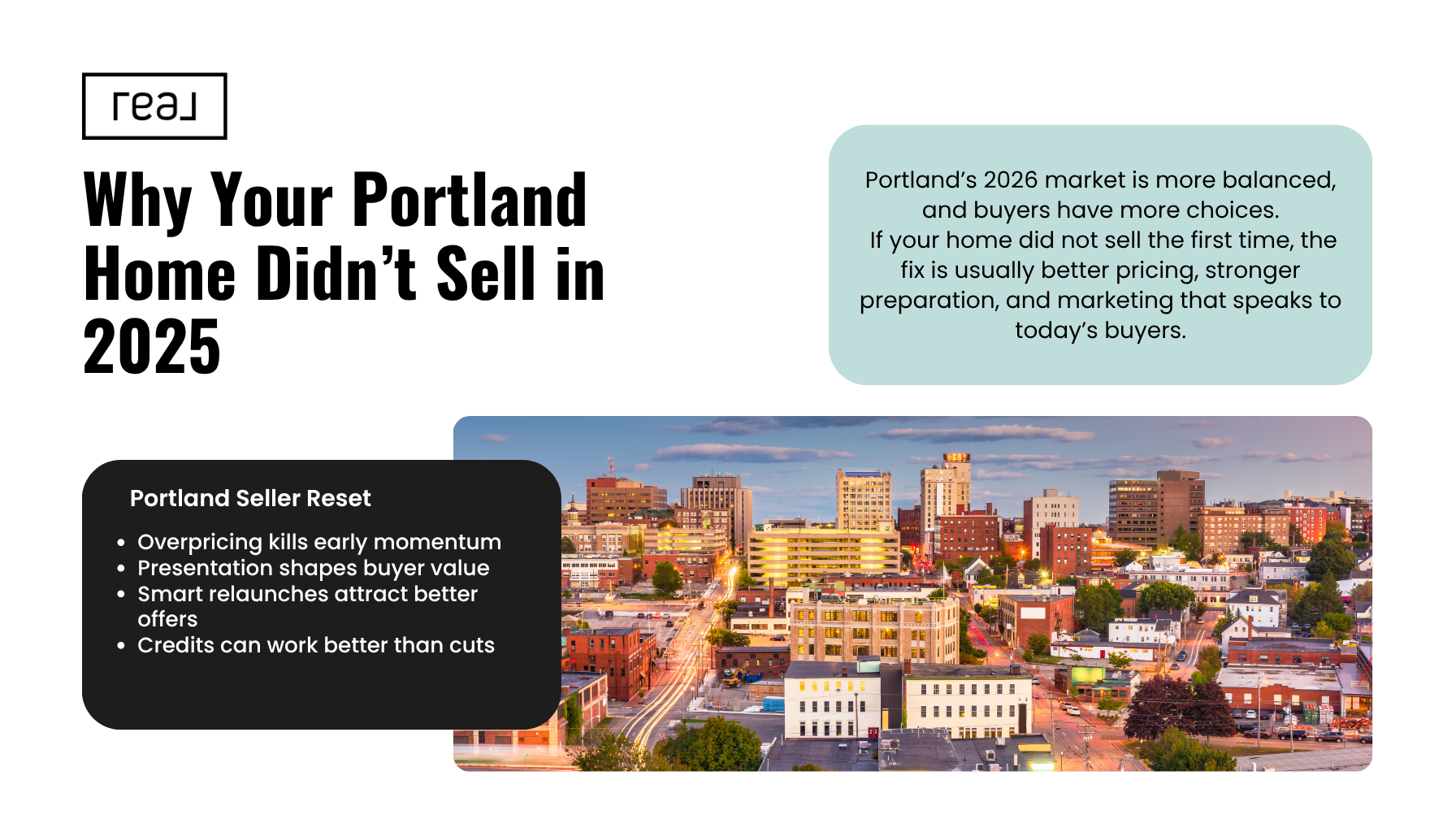
- Most failed listings were overpriced or underprepared for today’s balanced market.
- Portland’s 3.6 months of inventory means buyers expect value, credits, and clarity.
- Strategic pricing, sharp presentation, and targeted marketing reset momentum quickly.
- Local timing, repairs, and credits often beat drastic price cuts for net proceeds.
What does it really mean when a listing fails to sell in Portland?
If your Portland home sat with little traction, you are not alone. The metro is operating in a balanced environment with about 3.6 months of inventory, and that changes how buyers behave. According to the Portland Regional MLS February 2026 Market Action, the median sale price hovered near $498,000 with typical market times around 42 days. In a balanced market, buyers have choices, and listings must show clear value to win attention.
I coach sellers to look beyond the price tag and study how buyers write offers today. Local MLS trends show roughly six to seven percent average list-to-sale negotiation and a majority of sales closing under list. That does not mean you must slash your price. It does mean the first two weeks are critical for pricing signals, showing experience, and usable concessions like repair credits or rate buydowns.
Seasonality matters too. National indices like the S&P CoreLogic Case-Shiller show spring listing windows often capture stronger buyer momentum than late fall or midwinter. Pair that with your neighborhood’s micro-trends to optimize timing and results.
Here is how I define it as Lisa Mehlhoff:
- The list price did not match the property’s perceived value in its price band.
- The home launched underprepared, so buyers mentally discounted it more than they should.
- The marketing missed the most likely buyer segment or failed to motivate urgency.
How does pricing strategy work in today’s balanced Portland market?
In 2026, the pricing conversation starts with demand bands. Sub-$500,000 starter homes see the most activity, while higher tiers require more differentiation. Portland Regional MLS shows steady supply since late 2025, which means buyers can compare multiple options before offering. If your list price assumed a bidding war, you likely missed the window where showings stack up and offers overlap.
Interest rates influence this psychology. Thirty-year fixed rates have been holding in the mid to high fives for well-qualified borrowers, which the Federal Reserve’s historical series tracks closely over time. You can see long-run rate trends on the FRED 30-year mortgage rate. Rate-sensitive buyers respond better to credits that improve payment affordability than to modest price trims. For example, a two-point temporary buydown can outperform a similar list-price reduction in perceived monthly cost.
Local context also matters. The FHFA House Price Index shows cooling from the pace of 2021–2022. Portland has adjusted toward balance rather than a retreat. That is why strategy beats guesswork. Bring comps closer in time, measure list-to-sale spreads by ZIP, and set a defensible list price that welcomes early offers.
How to set a data-backed list price
- Analyze three to five sold comps from the last 60–90 days within 0.5–1.0 mile.
- Compare the average list-to-sale discount in your ZIP. If it is around 6 percent, price within 1–2 percent of your target net and plan for credits.
- Monitor seasonality using national indicators like the S&P CoreLogic Case-Shiller Index and time your launch for peak foot traffic when possible.
Which neighborhoods require different tactics to relaunch successfully?
Portland is a city of micro-markets. A reset in Hillsdale is not the same as a reset in the Cedars District of East Vancouver. You need pricing bands, buyer profiles, and days-on-market expectations dialed in.
- Neighborhood 1: SW Portland, including Hillsdale and Multnomah Village
- Neighborhood 2: Cedars District and East Vancouver
Also keep an eye on the Lake Oswego Oregon Real Estate Market. Condos and townhomes near transit or village amenities demand premium presentation. Lake Oswego buyers scrutinize quality and HOA health. Upfront documents and polished marketing maintain pricing power in that corridor.
What are the pros and cons of relisting now versus waiting?
Pros:
- Spring and early summer typically deliver higher showing counts and faster decisions.
- A strategic refresh with pricing and credits can outperform broad price cuts.
- Inventory at 3.6 months creates room to negotiate without fire-sale optics.
Cons:
- Waiting for “the perfect market” can lead to carrying costs that erase gains.
- If repairs are needed, delaying without action risks repeat buyer objections.
- Rapid relist without changes signals desperation and invites lowball offers.
How do I fix a stalled listing step by step for better results?
Start with an audit. I review every photo, showing note, and feedback comment. We align the product with the price, then the marketing with the most likely buyer. The best relaunches feel like a brand-new debut, not a rehash of an old story.
- Pre-market prep timeline, 10–14 days
- Pricing and credits
- Marketing that finds the right buyer
- Launch and adjust cadence
One of my clients in Multnomah Village had listed at 565,000 with minimal prep and no credits. After 30 days, no offers. We reset at 549,900, added a 1.5 percent credit toward a temporary buydown, replaced two light fixtures, and staged the living room. Showings doubled in a week and we closed at 546,000 with a clean appraisal.
Another client in the Cedars area of East Vancouver had a great floor plan but tired paint. We invested 2,600 dollars in interior refresh and offered a capped repair credit. Rather than chopping 10,000 off list, we held price and negotiated a 7,500 dollar credit that saved the deal while protecting net proceeds.
Data and planning win in this market. For broader demographic and housing context across the region, see the Portland Housing Needs Analysis and the Washington OFM economic report for Clark County growth indicators. For long-run pricing and trend comparisons, use the FHFA House Price Index and S&P CoreLogic Case-Shiller Index. For monthly local stats, check the Portland Regional MLS Market Action.
FAQs
1) Should I lower the price or offer a credit first? Credits often preserve perceived value better than price cuts. Many Portland buyers prioritize monthly payment and move-in readiness. A 1–2 percent seller credit can fund a temporary buydown, closing costs, or defined repairs. If you are already within 1–2 percent of market value, start with credits. If showings are dead and feedback says “overpriced,” tighten price to re-enter buyer search bands, then layer credits.
2) How long should I wait before making a change after relisting? Treat the first two weekends as your proving ground. If online saves and in-person showings are low, act by day 7. By day 14, update photos, refresh the headline, and clarify credits. Balanced markets reward responsiveness. Avoid repeated micro-changes. Make one decisive improvement at each checkpoint so you create new urgency and a clean story for agents and buyers.
3) Do pre-list inspections really help in a balanced market? Yes. Buyers expect transparency. A 400–600 dollar pre-list inspection can transform negotiations from open-ended repair demands to a defined credit. It builds trust and speeds decision cycles, especially with first-time buyers who might be nervous about hidden costs. In SW Portland, older homes benefit most. Tackle small safety items before launch to avoid scaring off cautious buyers.
4) What is the best month to relist in Portland? Spring through early summer typically delivers higher touring volume. National data, including Case-Shiller seasonality, often shows stronger momentum March through June. If your home is move-in ready and attractively priced, that window can maximize competition. If you need repair time, a well-executed late summer launch can still perform, provided the list price, credits, and marketing align with current MLS activity.
5) How do you tailor strategy for relocators, tech professionals, and doctors? I headline commute times, healthcare campus proximity, and HOA readiness. For tech workers, I feature access to Highway 26, fiber internet, and home office layouts. For doctors relocating near OHSU or Legacy, I emphasize low-maintenance condos, parking, and transit. For military families, I highlight VA-loan friendly properties and school info. Each group values clarity on costs, timelines, and neighborhood amenities.
6) Will waiting for lower mortgage rates net me more money? Possibly, but not always. If rates trend down, buyer pools widen. Yet more listings may hit the market, creating fresh competition. The FRED 30-year mortgage rate shows how quickly rates can change. If your home needs repairs now, waiting without improvements rarely improves net. I run side-by-side scenarios using credits, timing, and probable list-to-sale spreads.
7) What if appraisals are coming in low in my area? Price inside the comp cluster and pre-package your upgrades with receipts. Offer a capped appraisal gap or pivot to credits to bridge differences. In places that recently saw price softness, like portions of East Vancouver, anchor your file with tight comps and a clean inspection report. Appraisers appreciate clarity, and buyers feel more confident when the roadmap is set before underwriting.
Conclusion
The bottom line A balanced market rewards precision. If your Portland home stalled, it likely launched with a price or presentation gap that buyers could not reconcile. The fix is not guesswork. It is a sharp pre-list plan, a data-backed price within 1–2 percent of target net, and buyer-friendly credits that solve for payment or repairs. Pair that with standout marketing and a 14-day feedback cadence. Whether you are in SW Portland, the Cedars in East Vancouver, or navigating the Lake Oswego Oregon Real Estate Market, I will tailor a neighborhood-specific relaunch that restores momentum and protects your bottom line.
Lisa Mehlhof Homes | License #220603251 Call or text 503-490-4888 https://lisamehlhoffhomes-
Categories
Recent Posts











"My job is to find and attract mastery-based agents to the office, protect the culture, and make sure everyone is happy! "