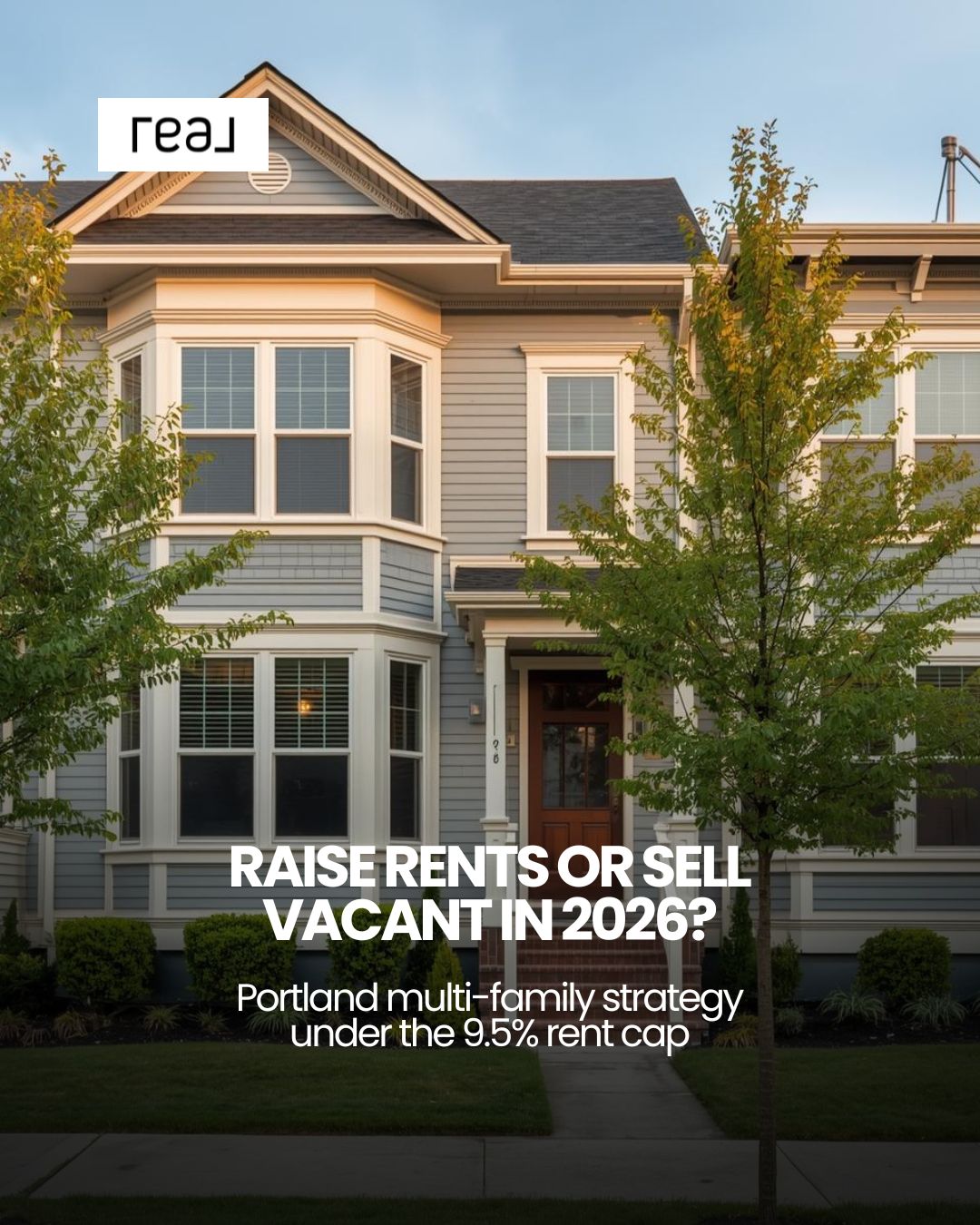
With the 2026 rent cap set at 9.5%, should I raise rents before selling my multi-family unit, or sell it vacant for a higher premium?
TLDR
- Raising rents may lift NOI and appraised value but risks tenant friction.
- Selling vacant often attracts owner-occupants and adds 5 to 7 percent premium.
- Portland inventory is tightening again, yet some submarkets feel more balanced.
- Your best strategy depends on unit condition, lease terms, and buyer profile.
What does the 9.5% rent cap really mean for your 2026 sale?
Oregon’s allowable rent increase for many covered residential units is set at 9.5% for 2026, per state guidance. That ceiling shapes your decision because income buyers value properties based on net operating income, not just the sticks and bricks. If your current rents are far below market, a lawful increase can nudge your valuation higher. If your units are near market already, the lift may be marginal compared to the marketing benefits of vacancy, refresh, and staging. Always confirm exemptions and notice requirements for your specific property and lease type.
On the flip side, implementing a rent hike shortly before listing can create friction with residents. Prolonged notices, potential turnover, or tenant pushback can delay your timeline. In a market that is leaning back toward balance in some pockets, days on market matter. A clean, vacant, and freshly updated building can show beautifully and draw a broader buyer pool, especially owner-occupants and house hackers.
Here is how I define it as Lisa Mehlhoff:
- If rents are 15 to 25 percent under market, explore a measured increase with full compliance.
- If units need cosmetic work, consider vacancy, refresh, and premium marketing.
- If timing is tight, weigh the certainty of vacancy against the uncertainty of rent changes.
How do current Portland market conditions shape this choice?
As a Portland Oregon real estate agent, I watch inventory and absorption closely because they affect pricing power. RMLS data shows the Portland metro had roughly 1.5 months of inventory in Q3 2025, a strong seller signal earlier in the year, while late-fall readings moved closer to a balanced feel in some segments. The metro median sale price in October 2025 was approximately 581,000, up 6.8 percent year over year, with SW Portland around 560,000 and East Vancouver near 485,000. Newer condos and townhomes have been the fastest movers, with absorption near a fraction of a month in recent reports. These numbers indicate demand remains resilient, but buyers are selective on condition and cash flow. RMLS Market Pulse Reports
Nationally, a balanced market is often defined as 4 to 6 months of supply. When conditions approach that range, pricing strategy and property presentation make a measurable difference. Under those conditions, buyers may discount occupied properties that show poorly or require heavy tenant coordination for tours. Conversely, a turnkey, vacant property with clear pro forma can achieve a stronger offer spread. NAR Research
How does NOI vs. buyer pool affect outcomes?
Income-focused buyers underwrite to NOI and cap rate. A lawful rent increase can improve NOI, but only if collections and occupancy remain stable. Owner-occupants and small multi buyers often prioritize lifestyle, layout, and immediate usability. They may pay a 5 to 7 percent premium for vacant and refreshed units that are easy to occupy on day one. Your ideal exit price depends on which pool you can best attract.
Which option works best in SW Portland, East Vancouver, Brush Prairie, and Battle Ground?
In SW Portland, especially Multnomah Village and the Southwest Hills, buyers value quiet streets, proximity to top schools, and quick access to parks. If you have a classic duplex or triplex with dated kitchens and baths, selling vacant often unlocks the premium because cosmetic updates and staging shine in showings. In 2025, SW Portland trailed the metro median slightly, yet remains highly competitive for quality inventory. A well-staged, vacant building near Council Crest or Multnomah Village will often outperform an occupied peer on both price and speed.
Across the river, Cedars East Vancouver WA real estate has benefited from improved transit and connectivity. Families and military-connected buyers commuting along I-205 are keen on low-maintenance properties with modern finishes. If your East Vancouver Washington real estate asset has stable tenants at market rents, a cash flow investor may reward your NOI. If rents trail by 15 percent or more and the units need paint, flooring, and lighting updates, consider listing vacant to capture that move-in-ready premium. Clark County’s recent infrastructure improvements and steady in-migration support both strategies when executed well. Clark County Community Development
- SW Portland
- Cedars, East Vancouver
Brush Prairie and Battle Ground have shown some of the fastest price growth in the region. If you hold small multi units there, highlight proximity to recreation and quality schools. For properties needing modest work, a short vacancy period to repaint, replace carpet with LVP, and update lighting often returns multiples of the cost through stronger offers. For stabilized assets with solid in-place leases, NOI-driven buyers still circle, especially when you provide clean rent rolls and maintenance records.
What are the pros and cons of each route?
Pros:
- Raising rents boosts NOI, potentially increasing appraised value for income-focused buyers.
- Selling vacant widens your buyer pool to owner-occupants and house hackers.
- Vacant units allow cost-effective upgrades that show beautifully and appraise better.
Cons:
- Rent increases can extend timelines and create tenant friction or turnover risk.
- Lost rent during vacancy plus refresh costs require cash and careful budgeting.
How do I execute either strategy for the best net result?
If you plan to raise rents before selling, start with compliance. Verify whether your property is subject to the 2026 allowable increase and follow notice periods precisely. Oregon Housing and Community Services provides guidance on allowable increases and exemptions. Proper documentation matters for buyer underwriting and appraisal. Oregon Housing and Community Services
If you plan to sell vacant, map a tight turnover plan. Typical Portland refresh budgets per unit often run:
- Paint and minor drywall: 1,500 to 2,500
- Flooring upgrade to LVP: 2,000 to 4,000 for smaller 2 bed layouts
- Lighting, hardware, deep clean: 800 to 1,500
- Basic staging of key rooms: 1,200 to 2,000
- Professional photos, floor plans, 3D tour: 400 to 700
Expect 7 to 21 days for turnover and 2 to 4 weeks on market in SW Portland Oregon homes for sale segments if priced right. In East Vancouver, similar timelines apply, with some units listing faster due to commuter demand. If your property can benefit from middle housing flexibility, Portland’s Residential Infill Project and Middle Housing Land Division rules can open fee-simple paths that attract townhome buyers. This can be a medium-term strategy, but it sometimes adds meaningful value. Portland Residential Infill Project
One of my clients in Multnomah Village owned a vintage triplex with 20 percent under-market rents. We opted for a single-unit vacancy, refreshed that unit for 9,800, and showed the other two on limited windows. The staged unit created the emotional hook that pushed three offers over list, and we closed 4.2 percent above asking.
Another client in Battle Ground had fully occupied duplexes with near-market leases. We kept tenants in place, documented expense reductions, and presented a clean trailing 12 with capital improvements. The buyer underwrote at a competitive cap and paid our full asking price. For investors targeting Battle Ground and Brush Prairie WA homes for sale, transparency and stable collections were decisive.
FAQs
1) How will appraisers treat a vacant multi-family compared to tenant-occupied? Appraisers look at comparable sales, income approach, and condition. Vacant units can show better, and a fresh condition may yield stronger comparables. That said, for income-driven valuations, in-place rent and verifiable collections carry weight. If you sell vacant, provide a realistic pro forma with rent comps, plus a scope of recent upgrades, to support value alongside market comps from the MLS.
2) What notice and documentation do I need to raise rents lawfully in 2026? Confirm whether your property is covered, then follow Oregon’s required notice periods and allowable increase rules. Include written notices, effective dates, and acknowledgment of receipt. Keep a paper trail of exemptions, capital improvements, and any addenda. Buyers and lenders will request this during due diligence. For statewide guidance on rent increases, review resources from Oregon Housing and Community Services. OHCS Rent Increase Resources
3) If I sell vacant, how long should I plan for turnover and listing? Budget 1 to 3 weeks for turnover depending on contractor availability and scope. Listing preparation, including professional photos and 3D tours, typically takes 3 to 5 days. In a balanced feel, plan 2 to 4 weeks on market if you price within the most recent comparable range. A well-prepared listing can still attract multiple offers, especially near transit and high-demand schools.
4) Will a rent increase always raise my sale price? Not always. If rents are already close to market, the incremental NOI gain may be modest. Also consider tenant risk, potential vacancies, and prolonged notices that can delay listing. In some cases, a vacant, refreshed property marketed to both investors and owner-occupants yields a higher all-in price. The right call hinges on your current rents, unit condition, and local buyer mix.
5) How do regional growth plans impact my exit timing? Regional planning that adds housing supply can moderate price pressure over time. Metro’s Urban Growth Boundary review anticipates additional capacity in coming years, which can influence long-term expectations. Near-term pricing in close-in neighborhoods often depends more on condition, rates, and buyer competition. If your project timeline is 12 to 24 months, keep an eye on UGB updates. Metro Council UGB Review
6) What documents help me capture top dollar with tenants in place? Provide complete rent rolls, copies of leases, a trailing 12 months of income and expenses, maintenance logs, and a summary of capital improvements. Include proof of deposits, utility responsibilities, and any rental assistance received. Organized documentation reduces buyer risk, helps lenders underwrite faster, and can improve appraised value by supporting stable in-place income referenced against MLS-derived comps.
Conclusion
The bottom line Your decision to raise rents or sell vacant is not one size fits all. In 2026, the 9.5 percent cap sets the parameters, but your best net depends on current rents, unit condition, and neighborhood demand. In SW Portland and Cedars, turnkey presentation often commands a premium from owner-occupants and house hackers. Stabilized assets in East Vancouver and the Clark County corridor can still win with clear NOI and clean documentation. Let’s review your leases, unit condition, and timelines so we can model both paths and choose the one that maximizes your outcome.
Lisa Mehlhof Homes | License #220603251 Call or text 503-490-4888 https://lisamehlhoffhomes-
Categories
Recent Posts










"My job is to find and attract mastery-based agents to the office, protect the culture, and make sure everyone is happy! "