How Portland Buyers Decide Whether a Home Is Priced Right This Fall
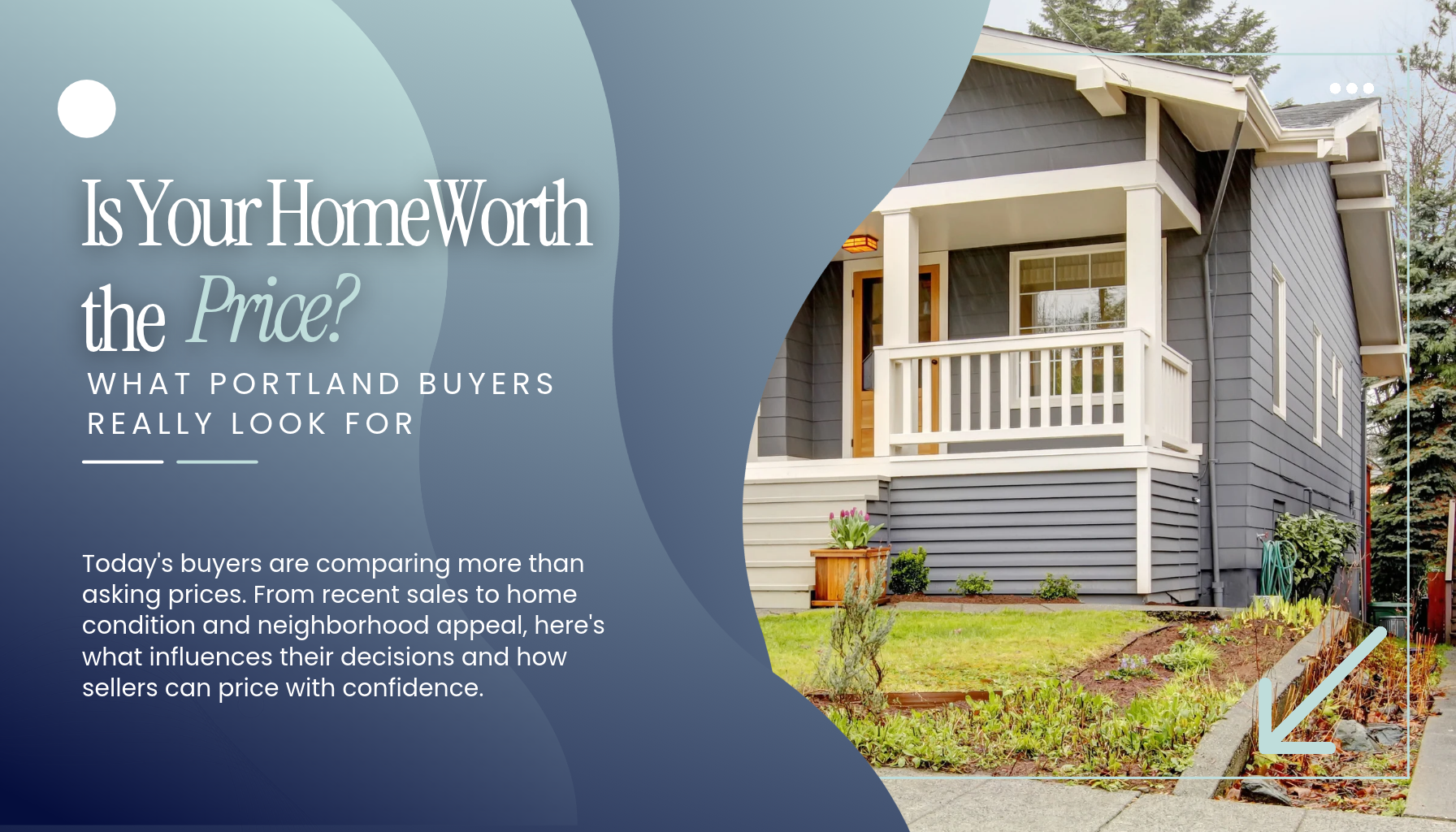
How do buyers in Portland, Oregon determine if a home is priced fairly during the fall market?
Portland buyers evaluate fall pricing by comparing recent comparable sales, watching days on market, reviewing list-to-sale ratios, and weighing neighborhood-specific factors like walkability and condition before making an offer.
Why This Matters Right Now in Portland Oregon
If you are thinking about selling your Portland home this fall, or if you are a buyer trying to figure out whether a listing in Laurelhurst or Woodstock makes financial sense, pricing accuracy is everything right now. Fall buyers in the Portland, Oregon real estate market are not browsing for fun. They have timelines. They have pre-approval letters. And they have done their homework.
What I consistently see in this market is that buyers arrive at showings with a clear sense of what "fair" looks like before they even walk through the front door. This is especially true for 55+ buyers and downsizers who have owned homes before, remember past market cycles, and tend to be skeptical of aspirational pricing. They want data, not optimism.
Whether you are listing a craftsman in Irvington, a ranch-style home in Brush Prairie, Washington, or evaluating homes for sale in Portland Oregon from the buyer's side, understanding how pricing decisions happen this fall will help you move with confidence instead of guessing.
How Comparable Sales Shape Buyer Expectations Across Portland Neighborhoods
Comparable sales, often called "comps," are the single most important tool buyers use to judge whether your home is priced right. And experienced buyers, particularly those who have bought and sold before, are very good at reading them.
Here is how it works in practice. A buyer looking at a listing in Sellwood will pull up recently closed sales of similar homes within roughly a half-mile radius. They are comparing square footage, lot size, condition, and age. If your home is listed above its closest comps without a clear differentiator, like a major renovation, an exceptional lot, or a standout view, buyers will mentally flag it as overpriced before they even schedule a tour.
What makes Portland's comp landscape tricky is the diversity of housing stock within short distances. A Laurelhurst Tudor and an Alberta Arts District bungalow may be only a few miles apart, but they occupy completely different comp pools. The same is true when comparing Portland homes with options in Vancouver, WA or Battle Ground, Washington, where newer construction and different lot sizes change the picture entirely.
With over 20 years of experience and more than 165 homes sold across Portland and Southwest Washington, I have seen how the right comps make or break a pricing strategy. My background in education translates directly here: helping you understand the data, not just handing you a number.
Why Comps Matter Even More for Downsizers
If you are selling a long-held home and simultaneously purchasing something smaller, comps affect both sides of your transaction. Overpricing your current home delays the sale, which delays your purchase. Underpricing leaves money on the table that you need for your next chapter. The margin for error is slim, and that is exactly why data-grounded pricing conversations matter more than wishful thinking.
What Days on Market Tells Portland Buyers About Your Price
Days on market is one of the most revealing metrics buyers watch this fall. Think of it as a real-time report card from the market itself. When a listing sits beyond the typical absorption pace for its neighborhood, buyers interpret that as evidence that the market has already voted "no" on the current price.
Here is the psychology behind it. A home in Foster-Powell that has been listed for several weeks longer than similar nearby homes triggers a predictable buyer reaction: "What is wrong with it?" Sometimes the answer is nothing except price. But that distinction gets lost once the listing starts aging.
A price reduction can reset buyer interest, but it also sends a signal that the seller may accept less than even the new asking price. In my experience, sellers who price correctly from day one avoid this spiral entirely. For downsizers with a simultaneous purchase in progress, a prolonged listing is especially costly because it puts your buying timeline at risk.
So what does this mean for you? If you are a buyer evaluating a Portland listing that has been sitting, you have leverage, but be strategic about how you use it. If you are a seller, getting the price right on day one is not a nice-to-have; it is your most powerful marketing tool.
How List-Price-to-Sale-Price Ratios Guide Portland and Southwest Washington Buyers
Beyond individual comps, buyers in this market watch a broader pattern: the list-price-to-sale-price ratio. This metric tells them whether homes in a given neighborhood are closing at, above, or below their asking price.
In a balanced or slightly buyer-favoring fall market, this ratio tends to be the compass buyers use to calibrate their offers. When the ratio dips below 100%, buyers feel empowered to offer under list price. When it holds at or above 100%, they know competition is still present and adjust accordingly.
Here is what many buyers miss, though. This ratio varies meaningfully by neighborhood and price tier. A craftsman bungalow in Irvington and a ranch-style home in Battle Ground, Washington will carry different ratios even in the same month. The Portland Oregon real estate market is not a monolith, and treating it as one is a mistake I watch buyers make regularly.
For 55+ buyers comparing homes for sale in Vancouver WA with options in North Portland or Southeast Portland, this ratio is an essential cross-market comparison tool. It tells you not just what homes are listed for, but what people are actually paying, and that is the number that matters.
Using Ratios Without Overrelying on Them
A word of caution. Ratios are averages, and averages can mask outliers. A few distressed sales or a single bidding war can skew a neighborhood's ratio in ways that do not reflect what your specific home will experience. This is where having an agent with deep local knowledge makes a real difference: someone who can contextualize the data rather than just reporting it.
Why Price Per Square Foot Only Tells Part of the Story in Portland
Price per square foot is one of the first things buyers look at when comparing homes across different Portland neighborhoods. It is a quick, intuitive way to ask: "Am I getting good value for the space?"
But here is what 20 years in this market has taught me: price per square foot is a starting point, not a verdict. A buyer comparing a Woodstock two-story with a Sellwood bungalow might see similar per-square-foot numbers, but the homes could differ dramatically in lot size, finishes, age, and walkability to local restaurants and parks.
This nuance is especially important for 55+ buyers evaluating single-story homes in Brush Prairie, Washington or Cedars East versus a Portland in-city condo. The per-square-foot lens helps frame the value of space versus location, but the numbers alone cannot tell you what your daily life will feel like. Are you five minutes from a coffee shop, or thirty? Can you walk to a park, or do you need to drive? Those factors shape real value in ways that a spreadsheet cannot capture.
What I tell my clients is this: use price per square foot to narrow your list, then use neighborhood knowledge to make your decision. Real estate is not just about finding homes for sale in Portland Oregon. It is about finding the right community, commute, walkability, and long-term fit for your lifestyle.
How Home Condition and Presentation Affect Pricing Tolerance This Fall
You have probably heard the phrase "move-in ready" so many times it has lost its meaning. But for fall buyers in Portland, condition and presentation directly affect how much they are willing to pay.
A home that is clean, decluttered, and well-photographed is perceived as worth more even at the same price point as a comparable home that is not. This is not speculation; it is a pattern I see repeatedly across neighborhoods from the Alberta Arts District to Lents to Southwest Washington communities.
For 55+ sellers preparing to downsize, this is actionable advice. Strategic pre-listing investment in fresh paint, landscaping, and professional staging can close the gap between what the market will bear and what you need to net from the sale. You do not need a full renovation. You need thoughtful presentation that lets buyers see the home's potential without tripping over deferred maintenance.
Fall Presentation Tips That Move the Needle
- Curb appeal matters more in fall. Seasonal plantings, clean gutters, and a well-maintained front entry set the tone before buyers step inside.
- Lighting counts. Shorter days mean buyers may tour in lower light. Bright, warm interior lighting makes spaces feel larger and more inviting.
- Declutter with purpose. Buyers need to envision their own life in the space. Fewer personal items, streamlined furniture arrangements, and open surfaces all help.
The Cross-Border Pricing Factor: Portland vs. Southwest Washington
One of the most common scenarios I work with involves buyers and sellers navigating the pricing dynamics between Portland, Oregon real estate and Southwest Washington real estate. If you are a downsizer considering a move from Northeast Portland to Vancouver, WA, or from Woodstock to Brush Prairie, Washington, you are not just comparing home prices. You are comparing total cost of ownership.
Oregon has no general sales tax but does have income tax. Washington has no income tax but does have sales tax. Property tax rates differ between the two states. A home priced at a given level in Clark County may represent a meaningfully different monthly cost than a similarly priced Portland home once you factor in the full tax picture. This is something you should discuss with a tax professional, because the math changes depending on your specific income, retirement sources, and spending patterns.
Beyond taxes, buyers comparing these markets are weighing commute trade-offs, access to services, and community feel. Battle Ground and Brush Prairie offer newer single-story inventory that appeals to downsizers, often at lower price points than comparable Portland neighborhoods, but with a different lifestyle profile. There is no universally right answer. The right answer depends on what matters most to you.
Rated 5 out of 5 stars by past clients and having closed over 165 transactions across both Portland and Southwest Washington, I help buyers and sellers understand neighborhood-specific factors so they can compare apples to apples.
Frequently Asked Questions
How do Portland buyers know if a home is overpriced this fall?
You start with comparable sales, looking at recently closed homes of similar size, age, and condition within roughly a half-mile. If the listing price sits above those comps without a clear upgrade or differentiator, most buyers will consider it overpriced. Days on market and whether similar homes have sold at or below list price also factor into your assessment.
What is the most important pricing signal for homes for sale in Portland Oregon?
Recent comparable sales are the foundation. They tell you what buyers have actually been willing to pay for homes like the one you are considering. Days on market and the list-to-sale-price ratio add context, but comps are the starting point every experienced buyer relies on.
Does price per square foot matter when comparing Portland neighborhoods?
It is useful as a quick comparison tool, but it only tells part of the story. A home in Laurelhurst and a home in Lents may have similar per-square-foot numbers but differ significantly in lot size, finishes, walkability, and community amenities. Use it to narrow your search, then dig deeper.
How does fall timing affect home pricing in Portland Oregon?
Fall buyers tend to be more serious and motivated, often working against a timeline. They are willing to move quickly on a well-priced home but skeptical of anything that looks like it was passed over during spring or summer. Sellers who price accurately on day one benefit from this urgency.
Why do some Portland homes sit on the market longer than others?
Price is often a significant factor. When a home is listed above what comparable sales support, buyers pass on it, and days on market climb. Condition, presentation, and location also play a role.
How do downsizers evaluate pricing when selling and buying simultaneously?
You need pricing accuracy on both sides. Overpricing your current home delays the sale and puts your purchase timeline at risk. Underpricing leaves money on the table. Working with an agent who understands both sides of the transaction, and who can run comps on both your current home and your target purchase, is essential.
Should I trust online home value estimates when looking at Portland homes?
Online estimates can give you a general starting point, but they often lack the local nuance that drives actual sale prices. Factors like a home's specific condition, lot characteristics, and neighborhood micro-trends are not captured well by automated tools. A local agent who knows the Portland market can provide a more accurate picture.
How does the list-to-sale-price ratio differ across Portland neighborhoods?
This ratio varies meaningfully by neighborhood and price tier. A historic home in Irvington may carry a different ratio than a newer build in Battle Ground, Washington, even in the same month. Knowing your specific neighborhood's pattern helps you calibrate whether to offer at, above, or below list price.
What home improvements help Portland sellers get their asking price this fall?
Strategic, not expensive, improvements tend to move the needle. Fresh paint, professional photography, clean landscaping, and decluttering make a measurable difference in buyer perception. You do not need a full remodel. You need intentional presentation that lets buyers focus on the home's strengths.
Is it better to buy in Portland Oregon or Southwest Washington for downsizing?
There is no universal answer. Southwest Washington communities like Vancouver, Brush Prairie, and Battle Ground offer newer single-story inventory and a different tax environment, while Portland neighborhoods like Sellwood and Woodstock offer walkability and established community character. The right choice depends on your lifestyle priorities, tax situation, and daily routine. A tax professional and a local real estate agent can help you compare the full picture.
The Bottom Line
Pricing a home correctly this fall, whether you are the buyer evaluating it or the seller setting it, comes down to data, preparation, and local knowledge. Portland and Southwest Washington buyers are arriving at showings more informed than ever, and they are comparing comps, watching days on market, reading list-to-sale ratios, and weighing neighborhood-level factors before making a move.
If you are a 55+ seller preparing to downsize, or a buyer trying to determine fair value on a home in Northeast Portland, Woodstock, Cedars East, or Brush Prairie, the right pricing strategy starts with an honest, data-grounded conversation. With 20 years of experience, over 165 homes sold, and 24 five-star reviews from past clients, I bring both the market knowledge and the teaching-focused approach to help you understand every number behind the decision. Reach out to me, Lisa Mehlhoff, at 503-490-4888 or through Lisa Mehlhoff Homes to start that conversation today.
Categories
Recent Posts








"My job is to find and attract mastery-based agents to the office, protect the culture, and make sure everyone is happy! "