If I have an unpermitted finished basement in PDX, how do I disclose it to protect me from liability without scaring off buyers?
TLDR
- Disclose clearly on required forms, then frame the space as valuable bonus area.
- Pre-list inspections, engineer letters, and cost estimates reduce fear and surprises.
- Offer options: as-built permits, targeted fixes, or closing credits based on goals.
- Market within context of tight supply and strong demand to keep leverage high.
What does an unpermitted finished basement really mean in Portland?
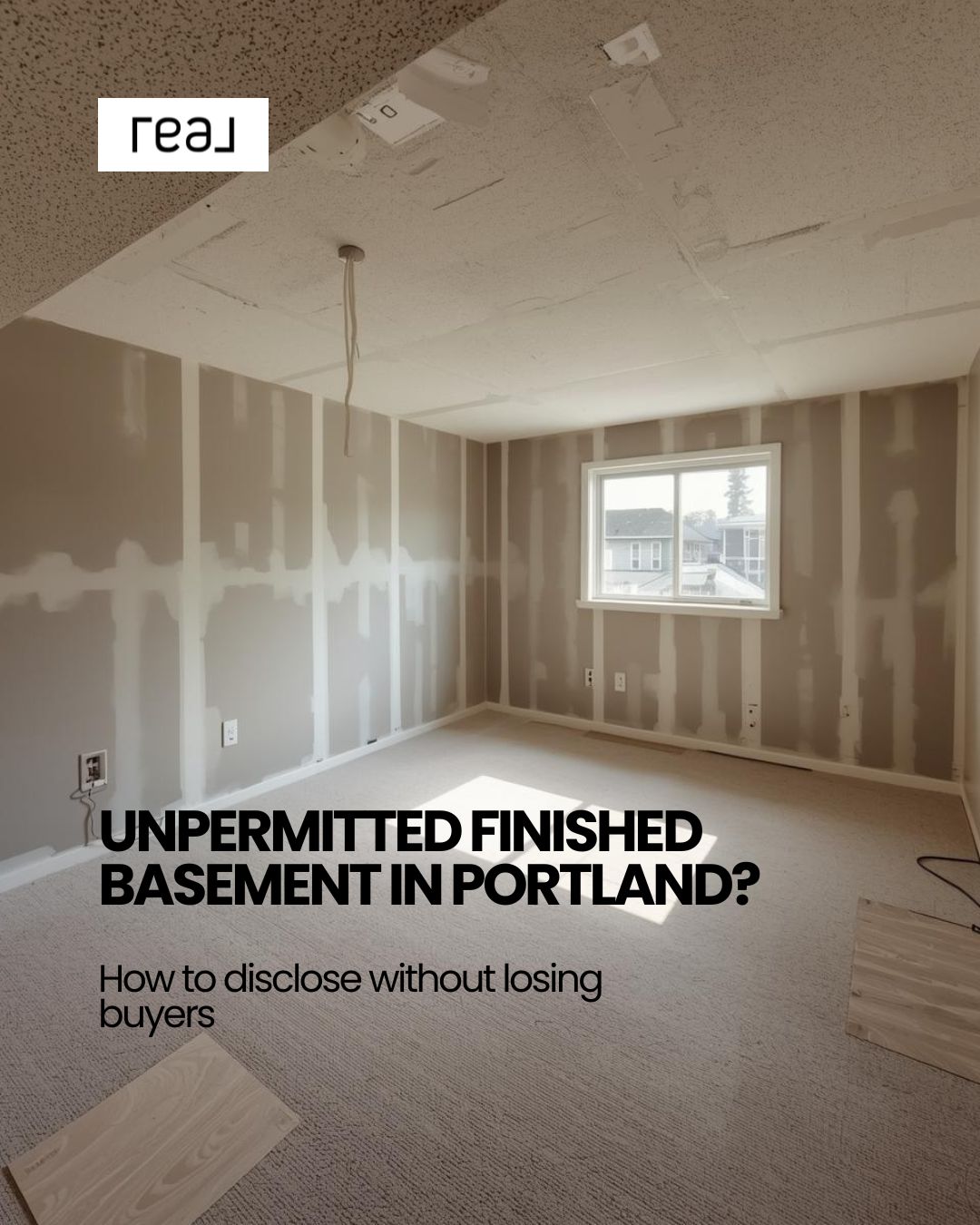
In many Portland neighborhoods, especially early-century bungalows and mid-century homes, owners finished basements without pulling all the right permits. That might include adding a bedroom without an egress window, installing a bathroom without plumbing permits, or finishing walls without proper insulation and vapor barriers. As a Portland Oregon real estate agent, I see this often in Multnomah Village, Hillsdale, and South Burlingame, and it is not automatically a deal-breaker.
Today’s market context matters. According to regional MLS reports, the Portland metro median sale price reached about $554,000 in June 2025 with only 1.8 months of supply, indicating a competitive environment that rewards preparation and transparent disclosure. SW Portland’s median is approximately $675,000, and East Vancouver sits near $515,000, which supports the idea that buyers will still compete when a property is well presented and risks are addressed through documentation and pricing tied to comparable homes RMLS Market Action.
Here is how I define it as Lisa Mehlhoff:
- Unpermitted equals finished work lacking final approval by the authority having jurisdiction.
- It is common in older homes and can be managed with the right plan.
- Buyers respond best to clarity, credible documentation, and predictable next steps.
How does disclosure work in Oregon and SW Washington?
In Oregon, sellers must complete the Seller’s Property Disclosure Statement and disclose known unpermitted improvements. This is required by statute and is not optional. The safest approach is full transparency supported by inspection reports and credible cost estimates so buyers understand scope and risk. If a seller tries to minimize or hide the issue, it can create far more liability than simply stating facts up front. Review the statute and instructions directly at the Oregon Legislature site to understand your duties as a seller Oregon Seller Disclosure - ORS 105.464.
Across the river, Washington has its own disclosure framework for residential real property transfers, which applies in places like East Vancouver, Fisher’s Landing, and the Cedars area. If you are selling in Clark County, we will use the state’s real property transfer disclosure statement and tailor your strategy to local permitting norms and buyer expectations Washington RCW 64.06 Disclosures. In both states, your disclosure should be concise, factual, and paired with documents that reduce uncertainty.
What documents help most?
- A pre-listing general inspection and, if applicable, a focused structural or 4-point inspection.
- A letter from a licensed engineer stating whether the framing and foundation appear adequate.
- A written city or county permitting path, including timelines and fees for as-built permits.
- 1 to 2 contractor estimates for key items like egress windows or electrical corrections.
Where do unpermitted basements show up locally, and what should buyers expect?
Older housing stock in SW Portland is full of character and occasional unpermitted improvements. Mid-century ranches in Hillsdale and early-century homes in Multnomah Village often have partially or fully finished basements that were created decades ago. On the Washington side, East Vancouver neighborhoods like Fisher’s Landing and the Cedars East Vancouver WA real estate corridor include a mix of newer builds and remodels where bonus rooms or guest suites may not have received final approvals.
Portland’s permitting queue can vary. For basic as-built permits and simple corrections, a 4 to 8 week path is common, though complexity can extend timelines. In Clark County, simpler as-built approvals may be resolved in 2 to 6 weeks. We will confirm current timelines with the permitting offices so you can decide whether to permit before listing or disclose and offer a credit Portland Permitting Clark County Community Development.
- Multnomah Village
- Fisher’s Landing - East Vancouver
What are the pros and cons of common strategies?
Pros:
- Full as-built permit before listing: Maximizes certainty and marketability, often improves appraisals.
- Engineer letter plus repair bids: Fast to assemble, reduces fear while keeping timeline flexible.
- Seller credit in lieu of work: Keeps listing timeline short and lets buyers customize solutions.
Cons:
- Full permit path: Requires upfront time and money, can delay listing during a hot period.
- Engineer letter only: Some buyers or lenders still prefer final permits for bedrooms or baths.
- Credit only: If scope is unclear, buyers may overestimate costs and ask for larger concessions.
How do I create a plan that protects me and keeps buyers confident?
Start with the fundamentals. A pre-listing inspection plus a brief consult with a structural engineer is the best foundation. If the space includes a bedroom, price an egress window and verify ceiling height. If a bathroom exists, price venting, GFCI upgrades, and any plumbing corrections. Typical costs I see in Portland for targeted seismic and structural items range from $8,000 to $20,000 for foundation bolting and cripple wall bracing, depending on scope and access. That aligns with regional guidance on retrofit ranges from local academic and public sources. If needed, we will verify liquefaction and landslide risk using Oregon’s geohazard viewer so an engineer can tailor advice Oregon Geologic Hazards Viewer.
Remember that buyers also care about energy and operating costs. As of January 1, 2025, Oregon sellers must obtain and disclose a Home Energy Score before listing. If your basement contributes to heat loss, a few low-cost weatherization improvements can improve the score and buyer perception. The Oregon Department of Energy provides program details that help us plan upgrades with the best return Oregon Home Energy Score Program.
One of my clients in Hillsdale had a 1950s ranch with a finished basement that included a non-permitted bedroom and bath. We secured a structural engineer letter, installed a proper bath vent, added GFCI outlets, and priced an egress window with two contractor bids. We disclosed clearly, provided all documents at launch, and offered a modest closing credit. The home drew three offers and sold slightly above list within a week.
Another client in Fisher’s Landing wanted maximum certainty. We pursued an as-built permit before listing, corrected electrical items, and added an egress window. The timeline took five weeks from consult to final. We then marketed the space as a compliant guest suite, and the appraisal treated the area as finished living space, which supported a stronger contract price.
Market context supports both approaches. With Portland metro inventory at 1.8 months and SW Portland Oregon homes for sale averaging higher price points than the metro median, buyers often accept disclosure plus documentation when the price reflects the situation. In East Vancouver Washington real estate, quicker permitting in some cases lets sellers resolve issues pre-list without missing momentum. For those near Lake Oswego or tracking the Lake Oswego Oregon Real Estate Market, higher expectations for finish quality make an engineer letter plus targeted corrections especially compelling.
FAQs
1) Should I get an as-built permit before listing or disclose and offer a credit? It depends on scope, timing, and your pricing strategy. If you can resolve items in 4 to 6 weeks, permits may expand the buyer pool and improve appraisals. If time is tight, combine clear disclosure with an engineer letter and firm bids. I will compare your likely net under both scenarios using current MLS comps and absorption patterns so you decide confidently.
2) Will appraisers count unpermitted basement square footage or bedrooms? Appraisers follow lender and USPAP guidelines, and many will not count unpermitted bedrooms as conforming living area. However, documented improvements, engineer letters, and as-built permits can support partial value recognition. My job is to package your disclosures, bids, and photos so appraisers see quality and feasibility. In tight inventory conditions, buyers may still pay for usable bonus space.
3) How much does it cost to make a basement bedroom compliant? Common items include an egress window, electrical upgrades, smoke and CO alarms, and occasionally framing or insulation adjustments. Egress windows often run a few thousand dollars depending on excavation and light well needs. Electrical safety upgrades are usually modest. If seismic bracing is recommended, that can range from $8,000 to $20,000 based on access and size. I obtain two written bids for accuracy.
4) Will unpermitted space kill FHA, VA, or conventional financing? Not necessarily. Financing focuses on safety, soundness, and security. If the space creates a health and safety concern, lenders may require correction or a credit. If it is simply unpermitted but safe, disclosure plus documentation can be acceptable. We will position the property so the main living area supports value and the basement is presented as bonus space with a clear path to compliance.
5) How do I reduce buyer fear without overspending before listing? Invest where risk is highest and returns are fastest. Get a pre-inspection and an engineer letter. Address easy safety items like GFCIs and proper venting. Provide two contractor bids for the remaining items and offer a reasonable credit if you are not doing the work. Make all documents available on day one. This signals transparency and helps buyers move from fear to facts.
6) Are Portland liquefaction or landslide zones a big issue for basements? They can be a factor. We check state hazard maps and, if relevant, consult an engineer to confirm recommendations. In moderate to higher risk zones, extra attention to drainage, lateral bracing, and anchoring can reduce future concerns. Having those findings in your disclosure packet shows buyers you have done your homework, which supports confidence during negotiations and the appraisal process.
7) How does the Residential Infill Project or zoning affect basement strategy? On major corridors that may allow increased density in coming years, the long-term land value can support investment in compliance or even future redevelopment options. Knowing your zoning and corridor status can guide whether to pursue permits now or disclose and sell at a fair market price. You can review city policy updates here Portland Residential Infill Project.
Conclusion
The bottom line Unpermitted finished basements are common in our area, and they can be sold successfully with the right plan. Disclose clearly and back it up with inspections, an engineer letter, and realistic bids. Decide whether to secure as-built permits now or provide a credit based on timeline and market momentum. In a competitive environment supported by current MLS data, a transparent and well-documented approach keeps buyers confident and protects you from liability. I will tailor the strategy to your neighborhood, price point, and buyer profile so you maximize your net. You can also explore more about whether it's a good time to invest in properties with such features.
Lisa Mehlhof Homes | License #220603251 Call or text 503-490-4888 https://lisamehlhoffhomes-
Categories
Recent Posts











"My job is to find and attract mastery-based agents to the office, protect the culture, and make sure everyone is happy! "