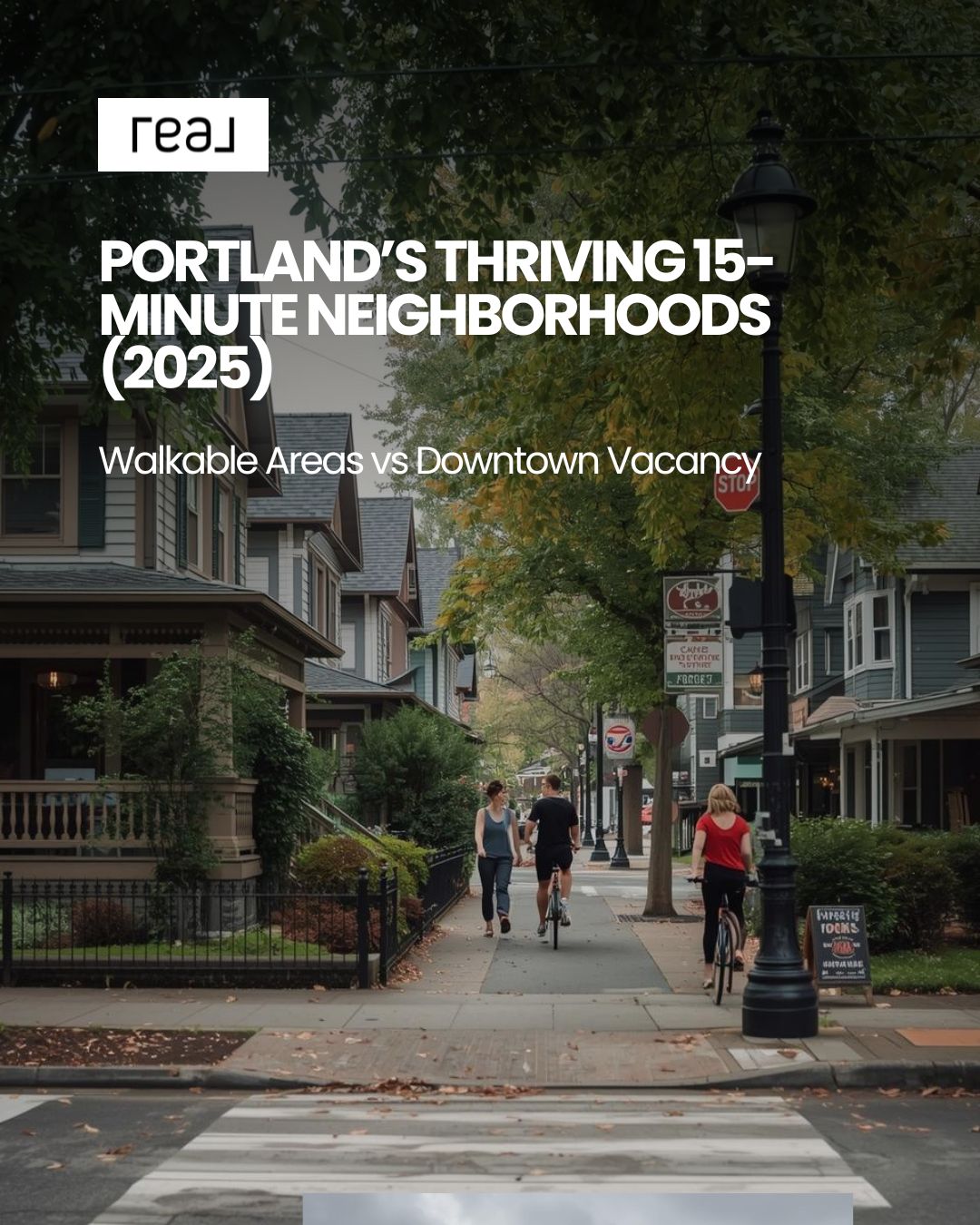
Which 15-minute neighborhoods are thriving versus those struggling with downtown vacancy?
TLDR
- Walkable, amenity-rich districts like Sellwood-Moreland and Mississippi-Alberta continue attracting buyers.
- Downtown and the Lloyd District face higher commercial vacancy and softer condo demand.
- Portland pricing is stable with roughly two offers per home and quicker DOM.
- Clark County pockets like Cedars and Battle Ground offer value with car-light convenience.
What does a “15-minute neighborhood” really mean here?
A 15-minute neighborhood puts daily life within a quick walk or bike from your front door. Groceries, coffee, schools, parks, health care, and transit are close, so you spend less time driving and more time living. In the Portland-Vancouver market, these districts have held strong through recent shifts because convenience never goes out of style.
Local MLS trend data for fall 2025 shows stability in Portland with a median sale price near $511,000, roughly 27 days on market, and about two offers per home. Inventory sits near a balanced level, and sellers are increasingly using concessions to help buyers manage rates. On the Washington side, Clark County MLS data indicates Vancouver-area medians in the mid 500s with roughly a five to six week path to pending in many neighborhoods.
For first-time buyers, relocations, and busy professionals, these areas often deliver resilient resale value and a lifestyle fit. As a Portland Oregon real estate agent, I watch how schools, parks, and retail health signal which places are thriving or slipping.
Here is how I define it as Lisa Mehlhoff:
- A safe, comfortable walk or bike to daily essentials within 15 minutes
- Reliable transit or quick commute to major job centers or campuses
- Healthy retail occupancy, active parks, and engaged neighborhood associations
How is the market shaping winners and strugglers right now?
Rates and remote work patterns are the current swing factors. Mortgage rates tracked by FRED’s 30-year fixed series have hovered in the mid to upper 6s at times in 2025, which affects affordability and days on market. Neighborhoods that compress commute time and errand time still command strong interest. Areas dependent on office worker foot traffic see softer condo demand and longer marketing times.
On the price side, broad measures like the FHFA House Price Index show regional stability over the past year, with some micro-markets outperforming. Locally, the MLS reflects steady Portland pricing and a moderate rise in inventory compared with early 2024. Nationally, months of supply remains below long-term norms, according to NAR Research, which supports prices even where demand has cooled.
Downtown commercial vacancy continues to challenge the urban core. That impacts ground-floor retail vibrancy and, in turn, the perceived value of some nearby condo buildings. By contrast, close-in walkable corridors like Mississippi-Alberta and Sellwood-Moreland have healthy foot traffic and neighborhood services, keeping buyer interest high and marketing times reasonable.
What about concessions and rate buydowns?
Seller-paid concessions are still part of the playbook. Local MLS negotiations often include 2-1 rate buydowns or credits toward closing costs. In many Portland submarkets, buyers budget 1 to 2 percent of the purchase price in potential credits, with dollar amounts commonly in the 5,000 to 10,000 range depending on the price point and competition level. When inventory inches up, buyers gain leverage to ask for repairs, credit for rate buydowns, or HOA budget reviews on condos. For insights on how much concession money to budget and manage closing costs, consider fees paid at closing overview.
Which neighborhoods are thriving, and which are struggling with vacancy?
Let’s look at the winners first. These districts offer a full daily life in a short stroll or ride, with resilient retail and strong community identity.
- Details: Independent restaurants, boutiques, galleries, and pocket parks. Rapid access to downtown via bike and bus. Popular with tech professionals and creatives who work hybrid schedules. - Watchouts: Limited parking on event nights, older housing stock may need seismic and systems upgrades. - Typical timeline: Well-priced homes can move in two to three weeks, longer if a property needs updates.
- Mississippi-Alberta Arts District
- Details: River trails, New Seasons, cafes, and local schools all within minutes. Solid single-family inventory and townhome options. Great for first-time buyers stepping up from condos. - Watchouts: Bidding can heat up on turnkey homes, and proximity to the river can raise flood insurance questions in a few pockets. - Entry-level path: Buyers often start with 2-bedroom cottages or townhomes, then trade up locally over time.
- Sellwood-Moreland
- Details: True village feel, top-rated schools, and boutique retail. Close to OHSU and downtown job centers. This area is a strong match for clients seeking SW Portland Oregon homes for sale with walkable perks. - Watchouts: Inventory can be thin in the spring surge, and some homes need energy upgrades. - Typical timeline: Competitive pricing gets attention within 10 to 20 days, longer for unique layouts.
- Multnomah Village and Hillsdale in SW Portland
- Details: High retail occupancy, parks, restaurants, and community events. Consistent demand from executives and doctors relocating to the metro area. Strong school reputation. - Watchouts: Premium pricing, especially for updated homes and proximity to the lake. - Entry-level path: Townhomes or smaller vintage homes are common stepping stones.
- Lake Oswego’s Downtown and First Addition
Now, the areas that are challenged by commercial vacancy and remote work shifts:
- Details: Excellent transit and urban amenities, but some office towers remain underutilized. Ground-floor retail turnover affects street-level energy. - Watchouts: Condo HOAs may carry higher reserves or special assessments for building improvements. Buyers must review budgets, insurance, and rental caps carefully. For those navigating regulatory aspects, understanding city code 30.01.080 notice provisions is crucial. - Typical timeline: Condos can linger, especially if dues are high or retail remains in transition.
- Downtown Portland Core
- Details: Historically a retail and office hub with transit access. Longer recovery curve given hybrid work patterns and mall area shifts. - Watchouts: Price volatility in some condo buildings and storefront churn. Diligent due diligence on HOA documents is crucial. - Typical timeline: Often longer marketing periods. Well-renovated, fairly priced units still find buyers with patience.
- Lloyd District
Across the river, several Clark County pockets fit 15-minute living with good value:
- Details: Groceries, parks, and schools within short drives or bike rides, plus I-205 access. Homes appeal to buyers seeking East Vancouver Washington real estate with practical commutes. - Watchouts: Some subdivisions have stricter HOA rules. Verify internet providers and speeds for remote work. - Typical timeline: Four to six weeks to pending is common in balanced conditions.
- Cedars area of East Vancouver
- Details: Family-friendly amenities, new parks, and strong community identity. Local MLS shows medians around 530,000 in Battle Ground and roughly 525,000 in Brush Prairie in late 2025. - Watchouts: Longer days on market in certain seasons. Budget for larger lot maintenance and potential well or septic considerations outside city limits. - Entry-level path: Newer townhomes or single-level ranch homes. I help clients find Battle Ground and Brush Prairie WA homes for sale that keep errands short.
- Battle Ground and Brush Prairie
What are the pros and cons of focusing on 15-minute neighborhoods?
Pros:
- Stronger resale resilience and buyer demand over multiple cycles
- Lower transportation costs and time savings for busy professionals
- Daily quality-of-life upgrade, from parks and schools to local cafes
Cons:
- Premium pricing on updated, move-in-ready homes
- Competition on well-located listings, especially in spring and early fall
- Older housing stock may require seismic, energy, or foundation upgrades
How do I shop, budget, and time my move for success?
Start with clarity on timing, financing, and lifestyle. For many clients, a preapproval and a realistic concession plan are key. Local practice commonly sees 5,000 to 10,000 in seller credits, which can fund a 2-1 buydown or closing costs. Plan for 2 to 3 percent in buyer closing costs, plus inspections at 500 to 800, an appraisal around 700 to 900, and a home warranty if needed. Condo buyers should budget HOA dues that can range from 300 to 600 monthly, sometimes more in amenity-rich buildings.
Timelines vary by submarket. In thriving close-in neighborhoods, a well-priced home may be pending within two to three weeks. In downtown or Lloyd condos, expect a longer runway and deeper due diligence on HOAs, building reserves, and retail tenancy trends. On the Washington side, many East Vancouver and Battle Ground listings move in four to six weeks with proper pricing and presentation. I also use county data for taxes and property details through the Clark County Assessor.
One of my clients, a pair of tech professionals, wanted a walkable environment with a home office and quick access to the MAX. We narrowed to Sellwood-Moreland and Mississippi. After losing one multiple-offer situation, we secured a craftsman by negotiating a modest price reduction plus a 2-1 buydown credit. Their total payment fit the budget, and daily errands now take ten minutes or less.
Another client, a military family using a VA loan, aimed for a balance of affordability and convenience. We focused on Cedars East Vancouver WA real estate and Battle Ground for yard space and quick highway access. They landed a newer home with a seller credit for closing costs, which preserved their cash for furniture and a small backyard project. Their school and grocery runs are both under ten minutes. For more details on VA loans and credits, explore VA financing options.
For buyers who value density and culture but worry about vacancy, I often position downtown as a long-view opportunity. Renovated units with strong HOAs and sensible dues can be compelling value plays, especially for doctors relocating who want a simple commute to OHSU or Providence. The key is precise building-level due diligence and a realistic timeline to appreciation.
If you are planning an ADU or small-scale infill over time, the city’s next phase of the Residential Infill Project could matter. Portland’s code changes allow more gentle density on many lots, with updates scheduled to take effect in 2026. You can review details at the Portland Bureau of Planning and Sustainability. For landlords listing a rental, coordinate with the Portland Bureau of Development Services for the most current notice and compliance steps before marketing.
For first-time buyer assistance, explore the Oregon Housing and Community Services programs. National trends and research are available at NAR Research, and rate context is always updated at FRED.
FAQs
1) Which Portland neighborhoods best fit an under-500,000 budget with a 15-minute lifestyle? Look to eastside pockets near parks and neighborhood retail, plus select condos or townhomes in close-in areas. Some buyers expand their search to Milwaukie or deeper east Portland for single-family options. On the Washington side, East Vancouver and portions of Battle Ground offer strong value with short drives to daily needs. I regularly track these micro-markets and alert clients when inventory aligns.
2) Are downtown condos a value play or a risk right now? Both, depending on the building. Units with stable HOAs, good reserves, and fair dues can be compelling, especially for buyers who want culture and transit at a discount compared with peak pricing. The tradeoff is patience, potential for longer marketing times if you sell soon, and careful review of ground-floor retail health. I help clients vet reserves, insurance, and rental caps in depth.
3) How competitive are offers in thriving 15-minute neighborhoods? Competition varies by season, but expect roughly two offers on average for well-priced listings, with time to pending around two to three weeks. Clean terms, flexible possession, and targeted inspection requests help. We often structure offers with appraisal gap strategies that still protect your budget. I also watch for listings sitting past 21 days where concessions become more likely.
4) What incentives can I ask for to manage my monthly payment? Credits for a 2-1 buydown are common, along with closing cost contributions or repair credits. Typical concession ranges run 1 to 2 percent of the purchase price in balanced scenarios, higher in slower submarkets. I will pre-negotiate a credit target with your lender to confirm the payment impact and ensure the credit fits loan guidelines and local MLS norms.
5) How does the 2026 Residential Infill Project affect my options? Portland’s Residential Infill Project expands gentle density on many lots. By 2026, updated code provisions are expected to allow additional units or cottage clusters in certain areas, which can boost long-term flexibility and value. This is useful for multigenerational needs or future rental income. Review city guidance at the Portland Bureau of Planning and Sustainability and consult your architect early.
6) What should relocating doctors and tech professionals prioritize? Proximity to OHSU, Providence, or Intel corridors, plus reliable transit and strong schools if relevant. Many doctors gravitate to the West Hills, Lake Oswego, or SW villages for commute and privacy. Tech pros like Mississippi-Alberta, Sellwood-Moreland, and parts of Tigard for walkability and workspace potential. I match commute windows, school goals, and budget to specific blocks and buildings.
7) How can VA buyers compete in Clark County without overpaying? Use zero-down strength with a preapproval from a VA-savvy lender, then target homes that have been listed beyond 21 days to increase your chance at credits. We ask for modest repairs that matter, not cosmetic lists, and position your move-in timeline to match the seller’s needs. I also confirm taxes and exemptions with the Clark County Assessor so there are no surprises.
Conclusion
The bottom line The 15-minute lifestyle continues to drive demand where retail is healthy, parks are active, and transit is accessible. Neighborhoods like Mississippi-Alberta, Sellwood-Moreland, and SW village centers remain durable choices. Downtown and the Lloyd District offer opportunities, yet require sharper due diligence because of commercial vacancy. If you want SW Portland Oregon homes for sale, or you are exploring East Vancouver Washington real estate, I will help you map commute time, daily errands, schools, and budget into a clear plan. Reach out, and I will put data and local insight to work for you.
Lisa Mehlhof Homes | License #220603251 Call or text 503-490-4888 Learn more about how we can assist you
Categories
Recent Posts






"My job is to find and attract mastery-based agents to the office, protect the culture, and make sure everyone is happy! "