Renovation-Ready vs. Move-In Ready Investment Properties in Portland 2026: Which Strategy Maximizes Equity Faster
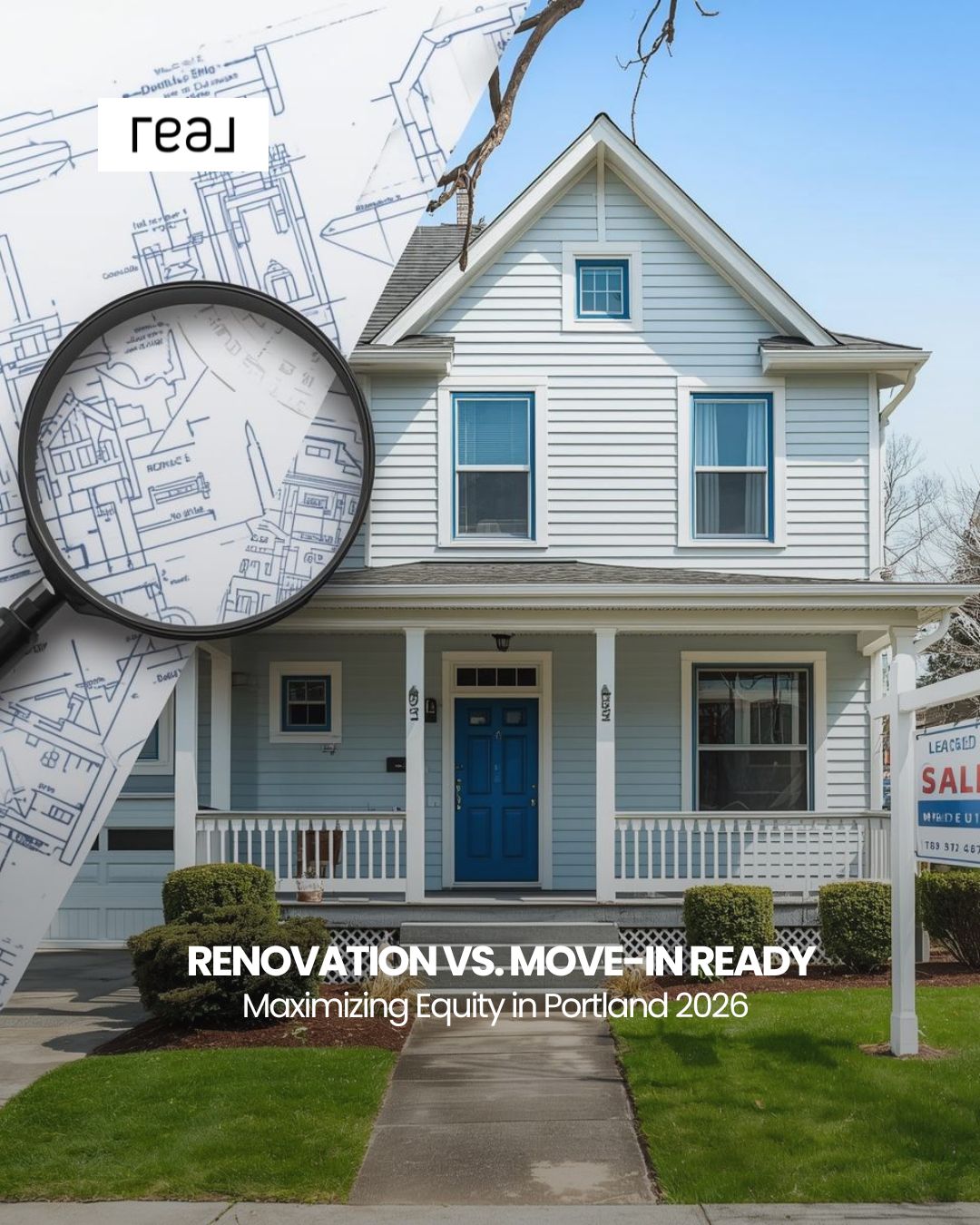
Renovation-Ready vs. Move-In Ready Investment Properties in Portland 2026: Which Strategy Maximizes Equity Faster?
In Portland 2026, renovation-ready properties usually build equity faster when you buy 8–10% below turnkey pricing and execute improvements that add 15–20% value within 6–12 months. Move-in ready wins if you need immediate rent and low risk.
Why This Matters Right Now
You are competing in a balanced Portland real estate market where timing and execution determine returns. Local MLS data shows a median sale price near $500,000 in late 2025, up about 3% year over year, with days on market dropping to roughly 42. Inventory sits near 4.6 months, which keeps negotiations real but not desperate. Rents average about $1,700 to $1,900, while mortgage costs near 6.8% interest can push monthly payments above $2,700. That math makes forced appreciation especially valuable in 2026. If you can buy below market, control renovation costs, and reposition a property quickly, you can create equity faster than market appreciation alone. If you need immediate cash flow with minimal downtime, move-in ready can stabilize faster. Your job is to match strategy to your capital, timeline, and risk tolerance, not just chase the best list price.
What You Need to Know Before You Choose a Strategy
You should anchor your decision in entry basis, timeline, regulatory friction, and your capital stack. In 2026 Portland, renovation-ready deals often trade 8–10% below turnkey comparables, and well-run rehabs can lift value 15–20% upon completion. That spread can outperform standard appreciation, provided your scope, permits, and holding costs stay controlled.
- Purchase discount: You will often see 8–10% under comparable move-in ready prices on livable fixers.
- Value lift: With targeted improvements, you can achieve 15–20% appreciation to after-repair value within 6–12 months.
- Carry costs: Budget for mortgage, taxes, insurance, and utilities for 4–6 months, longer if permits extend.
- Vacancy: Move-in ready typically leases within 2–4 weeks, while renovation-ready faces 2–6 months to completion and lease-up.
- Financing: Your options include FHA 203(k) for primary-turned-rental timelines, portfolio loans, local bank rehab lines, or bridge funds. Many local lenders target 70–75% loan to value on rentals.
- Regulation and risk: You should know Portland’s rental relocation assistance rules, plus permit timelines for structural and systems work. Soft costs like design and city fees can move your breakeven.
Your options include buying a renovation-ready home for forced appreciation and refinancing to pull out capital, or acquiring a move-in ready property for fast rent-up and lower ongoing capital expenditures. Weigh these against your tax plan, including depreciation and potential 1031 exchanges.
How to Compare Your Options
You will make a better decision by underwriting both paths side by side, not just reacting to a price tag. Renovation-ready can feel cheaper at closing, but the real edge comes from buying right and upgrading smart. Move-in ready can look pricier, yet you can stabilize rent quickly and avoid construction variance.
- Renovation-ready advantages:
- Renovation-ready drawbacks:
- Move-in ready advantages:
- Move-in ready drawbacks:
Key factors to evaluate:
- Entry basis versus realistic ARV: You should underwrite ARV with conservative comps and a sensitivity scenario. Your target is a minimum 10–15% spread net of rehab and closing costs.
- Timeline and permit exposure: You should confirm whether your scope is cosmetic or requires structural, electrical, or plumbing permits. Each added layer can add 2–8 weeks.
- Rent-to-value ratio and exit options: You should test stabilized rent against total cost and consider your best exit, refi or sell, if equity capture is strong.
Your Step-by-Step Guide
You can streamline execution by following a defined process that protects margin and timeline.
1) Set your investment goal Decide whether you want maximum equity growth, immediate cash flow, or a hybrid. Your goal determines whether renovation-ready or move-in ready is best.
2) Underwrite conservatively Model purchase price, rehab budget, carry costs, and ARV. You should run best, base, and worst cases. Use local MLS comparables from the last 90–180 days, adjusting for square footage and condition.
3) Choose financing early If you prioritize forced appreciation, you can explore a renovation loan, a local portfolio lender, or a bridge facility. If you want a fast lease-up, you can use conventional financing to lock predictable payments.
4) Inspect and scope Order a full home inspection and specialized evaluations for sewer, foundation, roof, electrical, and plumbing. You should write a detailed scope of work and get at least two contractor bids.
5) Plan permits and schedule For any structural, electrical, or plumbing work, you should contact the city early. Many cosmetic updates need minimal permits. Build a schedule that adds contingency days for inspections.
6) Execute renovation or lease-up For renovation-ready assets, you should prioritize high ROI improvements like kitchens, baths, flooring, energy efficiency, and system upgrades. For move-in ready, you can handle minor touch-ups and professional staging or marketing for strong tenant demand.
7) Stabilize and evaluate After work is complete, you should verify finish quality, complete final inspections, and set market rent using real listings. Then choose your exit, refinance to harvest equity or list the home, or hold for cash flow.
8) Track performance You should monitor rent, expenses, and occupancy monthly and compare to pro forma. Adjust rents at renewal to stay aligned with Portland housing market trends.
What This Looks Like in Portland Oregon
You will find different spreads by neighborhood. In 2026, several eastside and outer southeast areas continue to offer renovation-ready discounts, while inner westside pockets command move-in ready premiums. Local MLS data shows steady buyer activity, modest price growth, and shorter marketing times in well-located neighborhoods.
- Montavilla: You can target renovation-ready homes near a median around the mid to high $400,000s. Modest kitchen and bath updates, system refresh, and curb appeal can support a 12–18% value lift. Walkability and proximity to transit support rent growth.
- Powellhurst-Gilbert: You can see entry points near the low to mid $400,000s for fixers. Larger lots and garages suit value-add strategies like ADU-ready layouts, subject to permits. Hold periods can be slightly longer, so buy with a wider spread.
- Lair Hill and Corbett-Terwilliger-Lair Hill: You can find smaller homes and condos with premium access to downtown. Renovation-ready here is rarer but can reward you if you capture character features. Move-in ready often leases quickly due to location.
- Hillsdale and SW Hills: You often pay premiums for move-in ready. You can still add value with cosmetic refreshes, prefab bump-outs, or energy upgrades. These submarkets reward quality and command higher rents.
- Alberta Arts and Sellwood-Moreland: You will typically face competitive pricing for move-in ready properties. If you find light fixers, you can capture value through tasteful updates that align with neighborhood aesthetics.
Neighborhoods to consider:
- Montavilla: Renovation-ready pricing, solid transit access, strong tenant demand
- Powellhurst-Gilbert: Lower entry price, larger lots, ADU potential with proper approvals
- Lair Hill: Character homes and condos, close-in convenience, stable demand
- Hillsdale: Premium westside schools, strong rents, move-in ready stability
- Sellwood-Moreland: High walkability, fast lease-up for turnkey homes, selective value-add opportunities
What Most People Get Wrong
You might assume all renovations produce the same equity lift, but scope discipline is what creates margin. Many investors over-improve for the block, ignore permit timing, or underestimate soft costs like design, city fees, contingency, and utilities during vacancy. You could also miss appraisal dynamics if recent comps do not support your ARV, which compresses your refinance proceeds. On the turnkey side, you risk overpaying for finishes without validating rent-to-value ratios and long term capex. In Portland, you should account for regulatory items like rental relocation assistance, plus energy and permitting standards that affect timing. Your advantage comes from buying right, selecting the exact improvements tenants value, and protecting schedule so your carrying costs do not erase your spread.
Frequently Asked Questions
Which strategy grows equity faster in Portland in 2026?
Renovation-ready typically grows equity faster if you buy 8–10% under turnkey comparables and execute a focused scope that adds 15–20% value within 6–12 months. You need clear comps, tight budgets, and reliable contractors to protect that spread.
How do you finance a renovation-ready investment in Portland?
You can use a renovation mortgage, a portfolio loan from a local bank, a bridge loan, or private capital. Many lenders size loans to 70–75% of value. You should match the loan to your timeline, then refinance into long term debt once stabilized.
What rent-to-value ratio should you target in inner Portland neighborhoods?
You should expect rent-to-value ratios around the low to mid 0.30% range in inner neighborhoods, sometimes higher in outer areas. That is why forced appreciation matters. You can improve yield by adding an extra bedroom, an ADU, or energy upgrades.
How long do permits take, and how does that impact returns?
Simple cosmetic work can proceed quickly, but structural, electrical, or plumbing permits can add 4–12 weeks depending on scope and workload. You should build a 10–20% time contingency. Every extra week increases carry costs and reduces annualized returns.
Is it better to buy a move-in ready rental for faster cash flow?
If you value immediate cash flow and low risk, move-in ready is often best. You can lease in 2–4 weeks, minimize capex, and stabilize quickly. Your equity growth then relies more on market appreciation and smaller value-add touches.
The Bottom Line
You can build equity faster in Portland in 2026 with renovation-ready properties when you secure a real discount and execute a smart, permit-aware scope that adds 15–20% value within a year. If your priority is immediate, predictable rental income with minimal downtime, move-in ready wins. The best choice depends on your capital, timeline, and risk appetite. Underwrite conservatively, respect Portland’s permitting and rental regulations, and focus on neighborhoods where your plan matches buyer and tenant demand. When you balance entry basis, scope control, and schedule, you position yourself to outperform Portland housing market trends rather than just ride them.
If you’re ready to explore your options for renovation-ready or move-in ready investment properties in Portland Oregon, Lisa Mehlhof Homes can walk you through the specifics for your situation.
 503-490-4888 License ID: 220603251
Categories
Recent Posts






"My job is to find and attract mastery-based agents to the office, protect the culture, and make sure everyone is happy! "